

I used to be the plant engineer at a small company. One of my duties was running the maintenance department. There were anywhere from four to six people who reported to me.
The main job of our maintenance department was to fix whatever was broken. Often some of the guys would be skittish about attempting to fix something. They weren’t trying to get out of doing it, they were just nervous about working on something they had no experience with. (put a pin in that thought)
I would always tell them, “Hey…this is already broken. What are you going to do? Break it again?” I would tell them to just try. We had deep enough pockets that we could buy something if we didn’t already have a spare on the shelf.
I remember one day our lead mechanic, let’s call him Bob, was hesitant to attempt to fix an admittedly complicated mechanical geared flow meter. These meters were ancient tech. The original company had been out of business for decades (another bought the name but sold different equipment) and no spare parts were available.
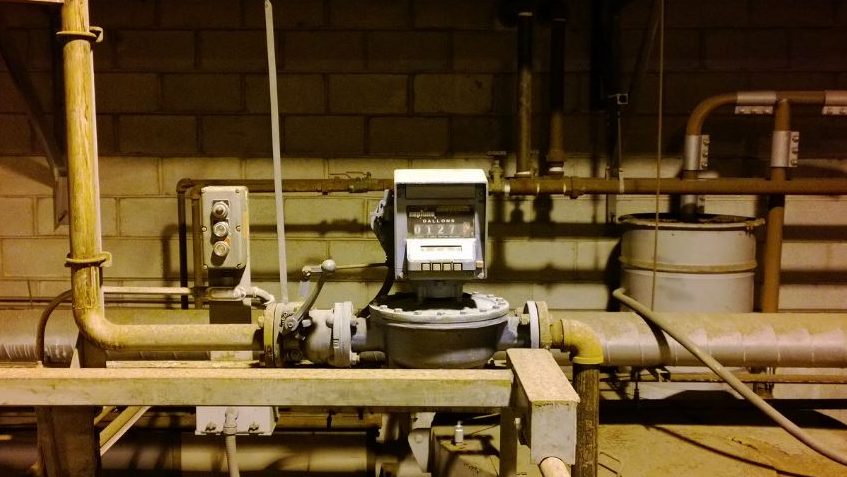
Bob and I stood at the maintenance table and looked at the meter. I gave him the whole speech. He was still nervous. I thought for a second and then I said “hey I don’t even want you to fix this right now. I want you to play with it. Take it apart. I don’t care if you can’t get it back together. See how it works. Touch the gears. Feel the springs. We know this one just stopped working last night, and this other old one from storage doesn’t work either.”
I came back an hour later to a mess. Both meters were taken apart, but the countenance on Bob’s face had changed from trepidation to joy. He told me something along the lines of “I know this looks like a mess, but I think I figured out how to make one good working meter from these two.”
Later in the day I wandered back to the shop again and sure enough, Bob had the meter put back together. Once we reinstalled it and verified it worked, he had the proudest look on his face. From then on he was our go-to geared flow meter repair man.
There are times in life when it just makes sense to leave something to the experts. The number of elite neurosurgeons in the world probably numbers less than 100. It’s silly to think just anyone could do that job. Or how about an advanced nuclear fusion physicist designing a new type of reactor process? There probably aren’t a lot of those people either.

Let’s step back now from these extremes to, say, a plumber. There are literally tens of millions of plumbers in the world. Anyone who is of average intelligence and average physical capacity can learn to do plumbing. They might not like it and they might not be good at it at first, but they could do it. I’m not attempting to be demeaning or elitist here. There are millions of engineers out there too. My very non-engineer wife figured out how to diagnose, take apart, and fix our vacuum cleaner because she wanted to prove to herself that she didn’t need the engineers help (me) all the time. And you know what? She did it and it works fine. (side note here, it was actually a fairly complicated fix and I was quite impressed)
So where is all this going? What am I trying to show here? I want to look at scriptural interpretation through this lens.
There are around eight billion people on the planet. I think it’s a pretty safe under count to say that there are at least one million theologians and pastors in the world. That’s one out of every 8,000 people. I personally know at least a dozen and I definitely don’t know 8,000 people in sum total.
If at least one million people on this earth are able to attempt scriptural interpretation (as pastors and theologians do), then why can’t I? Why can’t you? The short answer is, of course, we can. We may not have the depth of education, but we can remedy that to a degree with diligent research. We can bring our own expertise to the table that can compliment our limited technical depth of prior scriptural knowledge. I happen to have a knack for science. That helps guide me to what a reasonable interpretation might be on a number of verses.
Often people are scared to get something wrong in attempting to assess theological interpretations, so they’d rather just not try. Of course you’ll get something wrong! Want to know a secret about all those famous degreed theologians? They all got a few things wrong during the learning phase too. They likely still do. I get things wrong all the time. One helpful redditor who follows my blog, kindly corrected me just a few days ago on an issue I made an assumption on, and I’m glad they did.
In a field as diverse and opinionated as theological interpretation, you will always be wrong in someone’s eyes. In a way, that takes the pressure off to get it perfect. In theology, perfection is not an attainable goal. We’re starting off with a non-perfect book to begin with. You can’t get perfection from imperfection. Without sitting right beside the authors and having a candid conversation with them about what exactly they truly meant, we’ll never know with absolute certainty what they were thinking.
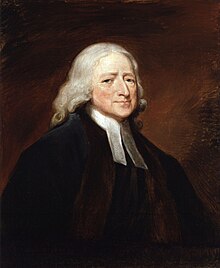
The 18th century theologian, John Wesley, had this to say on interpreting scripture.
“One is never to depart from the plain, literal sense, unless it implies an
absurdity.” – John Wesley
He goes on in other writings to outline what absurdity is.
- It contradicts other scriptures regarded as more basic—e.g., the love texts.
- is taken literally when only metaphorical or “figurative”
- is oversimplified or exaggerated,
- is “after the manner of men” or culture-bound,
- is contrary to reason or experience, or
- is clearly unethical, unconscionable, or unloving
I think this is a very reasonable take on how to interpret scripture. It’s more or less the framework I use. The idea of letting reason, logic, ethics, and experience help guide our interpretation is nothing new.
Don’t ever let yourself feel inadequate to understand the bible on your own. Letting others be the gatekeepers for what scripture means, is one of the root causes of why religion has such a bad reputation. This applies to all religions! At our disposal we have such a wealth of knowledge available that, and I will die on this hill, we are better suited to interpret scripture as a lay person today than a theologian of 100 years ago.
Tools like the blue letter study bible (available for free online) have the original text, definitions, language, cross references, commentaries, and more, all in one easy to use place.
A near infinite number of research papers written on all verses, even down to papers written on the study of a single word, are all available to us in an instant.
So get started. I want you take the bible apart and see how it works. Touch the verses. Look at the context clues around them. Feel the absurdity of some of the things you read. God didn’t write the bible only to be read and understood by a select few, and thank God for that.
Peace.
 Space For Doubt
Leave a comment