

Few people enjoy having their views or opinions challenged. Throughout all of human history this has remained constant. One example that came to mind when thinking about this post was the acceptance of a heliocentric solar system model.
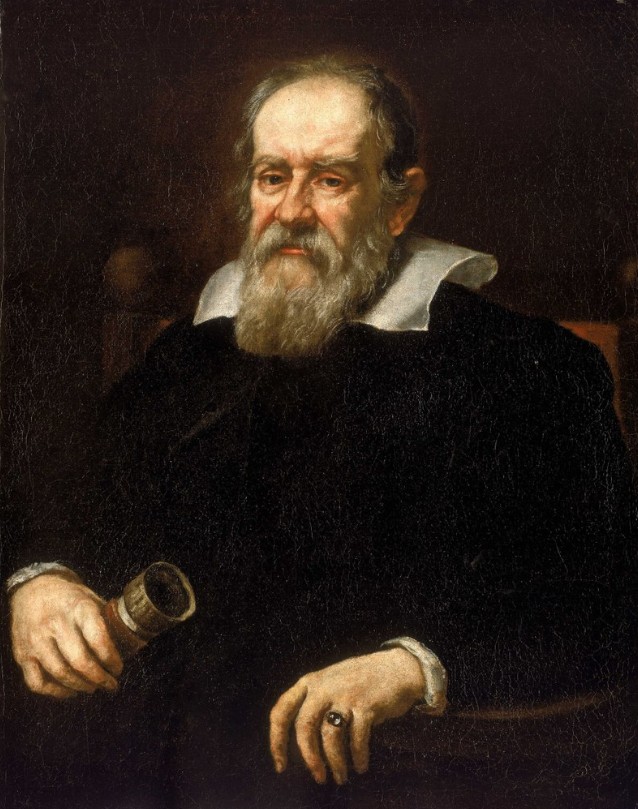
The church had been adamant that the earth was the center of the solar system. The famous Galileo Galilei said no it was not. (he based this partially on Nicholas Copernicus’ work). To the church, this type of science was new and distrusted. His statements on heliocentrism earned him an injunction from the church in 1616.
The only authority in the land for centuries (millennia really) had been the church. On all topics (legal matters, social order and hierarchy) they were the authority. They weren’t used to, or accepting of, being questioned.
Galileo Galilei was ultimately proven right, however it wasn’t until 1820 (some three hundred years later) that the church finally “allowed” it. They permitted another scientist, Joseph Settle, to declare the proper motion of the earth and celestial bodies as fact.
The science of modern critical biblical scholarship is likewise today relatively new, and to many, distrusted. The basic concepts were put into practice in the early 19th century, but remained relatively unknown outside of dedicated scholarly and biblical theology academic circles.
It wasn’t until around 30 years ago with the advent of easily available computing power, the connectivity of the internet, modern archaeology, digitalization of historical records, and other technological advancements that we unlocked our ability to deeply analyze the scripture. We unlocked the availability of this information for those outside the realm of academia. Even for those inside academia, the ease of access to resources greatly increased the collaboration and development of new theories. It allowed for a faster and broader peer-review process to vet the validity of new information. These resources were effectively never available to the silent generation or boomers during their formative years.
Think about it. These generations had none of this at their disposal during their education. They were stuck with what they learned in school or were taught in church. Is it any wonder then why we see such a strong defensive reflex towards this new information? It’s something they’ve never heard, presented in a format they’ve never seen, and in a manner they feel disrespects their faith simply because it could imply that what they have held onto for so long, may be wrong.
How is it then, that we know what we know? How does modern critical bible scholarship come to its conclusions? I’m not a biblical scholar by degree, but I will share what I know.
When were things written?
This is probably one of the bigger questions that often arise. It matters because the composition time of our various books raises critical issues like:
- Prophetic power – If a book was written after the dates of the prophecies it predicts (and yes….this does seem to have occurred. I’ll get to that in a later post), then it holds no prophetic power. Anyone can retroactively prophecy last year’s Superbowl winner.
- Authorship – If what is supposed to be the first book of the bible, was written 600 years later than tradition holds, then its authorship would no longer be attributable to the traditional author. (You guessed it, this happened too)
- Reliability – If a gospel were written so far removed from the life of Jesus that the person could not have been an eye witness, then it is no longer a reliable account. At least not as we think of it today. (We’re three for three here)
So how can we tell when things were written?
One way is by the language used.
Imagine you (today) are reading an article written by a 17th century New England colony resident. You would immediately be able to tell that the English used was a MUCH earlier version than in common use today.
Now let’s say we translate that into French. We also translate an article written by a writer in today’s time period into French. Then we have a French person read the two. Odds are that French person would not be able to tell linguistically which was written when. There would be contextual cues in the subject matter of course, but they would lose all of those unique linguistic dating cues in the translation process.
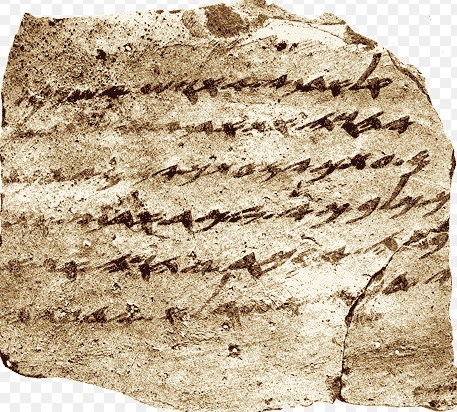
This is exactly what we have with ancient Hebrew and Aramaic. We can see certain sections of the OT, like the Song of the Sea and the Song of Deborah, being written in an archaic Hebrew. The creation account on the other hand, is written in late iron age Hebrew. There is a clear and notable distinction, but only if you read it in that language. A Greek translation loses that, even more so an English translation based on a Greek translation!
We also have the subject matter of course. If a book includes events clearly not in the time frame of that book, we know it was composed or at least modified much later. Thanks to modern archaeology and dating methods, many of these events are independently determinable outside of the bible’s text.
If a book uses names or practices not found in its supposed time period, then that’s another dead giveaway to it not being written at the time tradition states. Modern archaeology has again been a huge benefit here. We can date remains that contain this information in a multiple of ways today.
Yet another way we can tell authorship date is by a book that contains portions of other known-dated books. In that case, it’s pretty clear it MUST come later than the first. We can triangulate, so to speak, the authorship date between known goalposts.
There are certainly more methods than these few, but the advent of modern archaeology, the power of computing, and rapid global communication has made a huge impact. It has allowed us to use new evidence to establish better assessments of these authorship dates.
Not all of modern critical scholarship is a perfect slam dunk. A case in point is to go ahead and look up the dates for camel domestication in Egypt. There were some initial conclusions reached about dates from a sliver of evidence that initially seemed to invalidate Genesis’ mention of Abraham taking camels back from Egypt. A lot of skeptics ran with that and the story went wild.
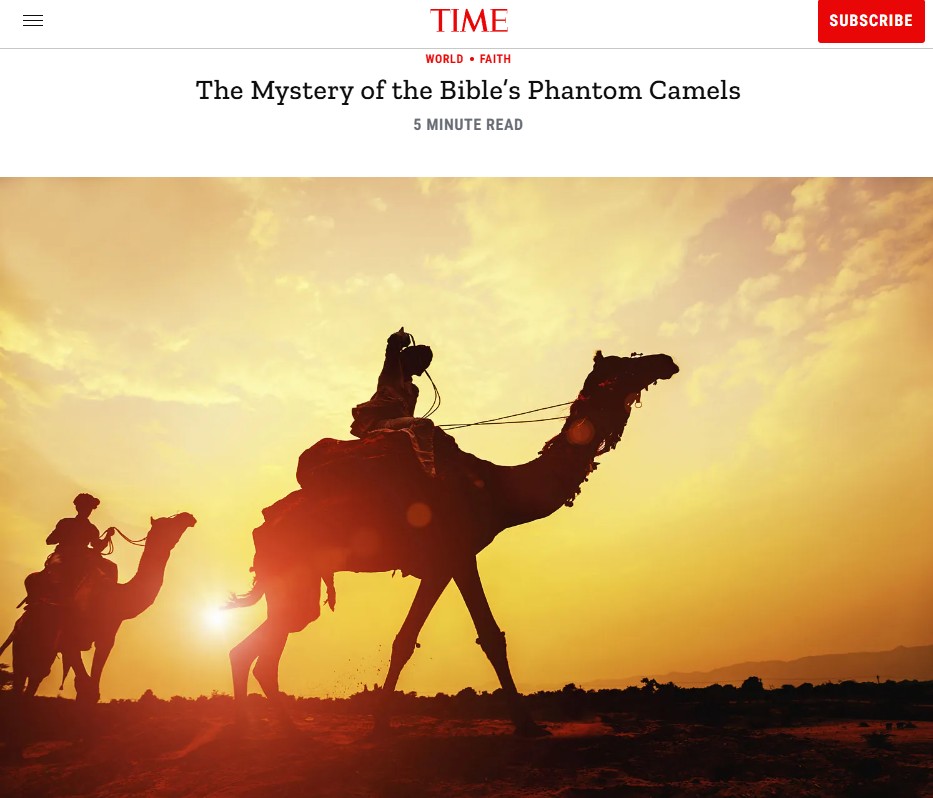
However, after more time went by, and more discoveries and links with already existing evidence were made, the error was realized. Today many scholars and archaeologists acknowledge camels were indeed in domesticated use plenty early enough for this story to be valid (at least in that aspect).
This was not a fault per se of modern critical scholarship/archaeology, but rather of a human origin. A small group of people saw a chance to discredit the bible and capitalized on unknown-at-the-time erroneous information. Yet science prevailed and does what science always should, it changed its mind based on the best information available. Don’t get me wrong, you can still go out there and find articles that retain this erroneous view, but that’s the nature of the world we live in. Many people also no longer believe the holocaust happened *indifferent shrug*.
Modern science and critical scholarship are not bad in and of themselves. It has no agenda to push other than what is the best explanation for the evidence we have. Just because the implementation of this science has the potential to uncover an uncomfortable truth, does not make it false.
The truth is not dictated by dogma. Humanity spent a long time believing that the earth was the center of the solar system. They were wrong. I’m reminded of a famous catholic theologian whose name escapes me now (despite a fairly intensive Google search) He said something along the lines of “The way that a church changes its fundamental beliefs is by the faithful simply ignoring them. The clergy will follow suit.”
The change by the catholic church to accept Heliocentrism wasn’t done out of generosity, or out of its own conclusions based on science. It was done because the rest of the world and many of its own members no longer believed in the long held tradition. The winds of change grew into a hurricane that threatened to cause irreparable harm should it attempt to maintain such an obviously false view. Change in official doctrine, just like a change towards equal rights, is rarely given willingly. It must be demanded and fought for. Pain must be inflicted such that to hold the old view is more painful than the new.
If we can know better, let’s believe better. Wouldn’t God want that?
Peace
 Space For Doubt
Leave a comment