

This begins a multi-post series on the end times as viewed by someone raised in a heavily end-times focused denomination (Seventh-day Adventist). We will cover five topics.
- How the end time predictions have failed over the last 2,000 years and why that’s relevant
- Discuss Daniel and why this book is completely misused and misunderstood by many Christians today
- See if Revelation is actually relevant at all
- Examine SDA eschatology and see how it aligns (or not) with the most up-to-date scholarship and history on Daniel & Revelation
- End with a proposal for a different end-times view and a different way of thinking


An All-Too-Common Mindset
People have been captivated by biblical apocalypticism from the moment they got their hands on Daniel and Revelation.
These books are like the Netflix Special Tiger King of the Bible. They are insane and addictive in their own special way. At the same time, readers have always wanted the Bible to be relevant to their day. (Especially the prophecies!)
We have the desire for relevance, combined with magnetic attraction. Is it any wonder why there is such an obsession with end-times prediction?
These prophecies have been reinterpreted hundreds of times over the last 2,000 years to apply to the immediate future of the reader. Upon those respective dates passing, the same number have failed.
You may wonder why people continue to do this in the face of 2,000 years of repeated failure. I certainly did, and let me tell you, that rabbit hole is pretty deep. Essentially people really want certainty that evil will face justice and that they will be vindicated as believing correctly, all within their lifetime. There’s also the pleasure/satisfaction of possessing exclusive knowledge and feeling like you alone can see the truth. It becomes another us vs them scenario. It becomes identity politics.
The more the world says “this is nonsense and you guys are crazy,” the more these people/groups feels validated in their belief. It’s worldly/satanic temptation to abandon belief, and they just need to try all the harder to maintain course. In their minds the “persecution” is evidence of the veracity of their belief.
“It’s easier to fool people than to convince them that they have been fooled.” – Mark Twain
There’s no reasoning with people that haven’t a use for reason. Perhaps fringe members of the group might bow-out, but the core? Forget it. Not until the failure has happened, not until the eyes are dry again, will there be space for an alternate idea.
But what happens if your predictions aren’t set on a certain date? What if it’s always “soon” but never quite here? What if the impending doom never amounts to more than a shadow? What happens if you believe in an unfalsifiable prediction with the same zeal as the rest of the past failures? Can one be pried away from error in these cases?
When I started this research I thought I might find a dozen or two failed predictions. Let’s just say I was off….by a lot.
The list of known failed predictions is far too long to put here. I’ve skimmed through it and will just show a few. Most of these are based on various interpretive antics used on the books of Daniel and Revelation.
Joachim of Fiore (1200ish)

This Italian mystic determined that the Millennium would begin between 1200 and 1260. He based his work on Revelation.
Europeans (1346-1351)
The black plague spreading across Europe was interpreted by many as the sign of the end of times. The plagues described in Revelation fueled this prediction.
Sandro Botticelli (1504)

This painter believed he was living during the Tribulation, and that the Millennium would begin in three and a half years from 1500. He wrote into his painting The Mystical Nativity that the Devil was loose and would soon be chained.
Michael Servetus (1585)

In his book The Restoration of Christianity, the Spanish born reformer claimed that the Devil’s reign in this world had started in 325 AD, at the Council of Nicea, and would last for 1260 years, thus ending in 1585.
Fifth Monarchists (1655-1657)
This group of radical Christians predicted that the final apocalyptic battle and the destruction of the Antichrist were to take place between 1655 and 1657.
John Napier (1688)

This mathematician determined the end of the world would be on this year based on calculations from the Book of Revelation.
Emanuel Swedenborg (1757)
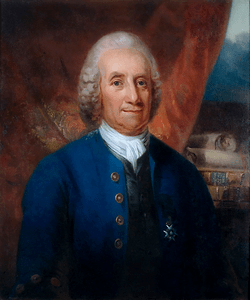
Swedenborg, a Lutheran theologian, claimed that the Last Judgment occurred in the spiritual world the year, 1757.
Richard Brothers (1793-1795)

This retired sailor stated the Millennium would begin between 1793 and 1795. He was eventually committed to an insane asylum.
John Wesley (1836)
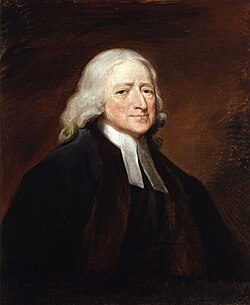
Wesley, the founder of the Methodist Church, foresaw the Millennium beginning in 1836. He wrote that Revelation 12:14 referred to 1058 to 1836, “when Christ should come.”
William Miller (1843/1844)

This is probably a more familiar name to SDA readers of this blog. He is forever linked with the term “great disappointment.”
Miller predicted that the 2nd coming of Christ would happen in the Hebrew year of March 21, 1843, to March 21, 1844.
When March 21, 1844 came and went, there was a great deal of sadness and frustration from Miller and his followers. However one of them determined that some extra “tarrying time” must be applied (based on additional texts) and that the real end would be on October 22, 1844.
This date would become known as the “great disappointment” as many had sold possessions, said their goodbyes, and readied themselves for the end.
Jonas Wendell
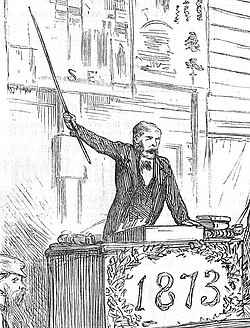
Jonas was a zealous Adventist preacher following in the spirit of William Miller. He searched Daniel and Revelation for insight and concluded that the end would come in 1873. He also died in August 1873, so perhaps he went to his grave convinced he still was right.
Ellen White (1882<End times<1915)

In her 1856 vision, White predicts that some of the people in her company on that day would see the 2nd coming. (failure 1)
In her early writings (circa 1882) she describes one of her visions of the 2nd coming of Jesus. There’s not a definitive date given for the return, but it is undeniably clear that this vision has her very much still alive at the time. If you’re curious, look at her early writings volume 15,16. (failure 2)
There is a full-court press of SDA apologists that try to gerrymander their way into alternate explanations, but none of the arguments stand up. It’s just a failed end-time prediction. (If you want to know more about the types of arguments they use, read my article on her here.)
Margaret Rowen (Feb 13, 1925)

According to this Seventh-Day Adventist, the angel Gabriel appeared before her in a vision and told her that the world would end at midnight on this date.
Florence Houteff (Apr 22, 1959)

The second prophet of the Branch Davidians predicted the apocalypse foretold in the Book of Revelation would proceed on this date.
David Berg (1993)

Berg predicted the tribulation would start in 1989 and that the Second Coming would take place in 1993.
Isaac Newton (2000)

In a blast from the past, Newton predicted that Christ’s Millennium would begin in 2000 in his book “Observations upon the Prophecies of Daniel, and the Apocalypse of St. John.“
John Hagee (2014)
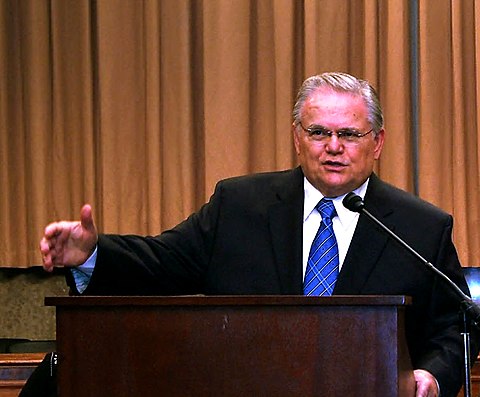
This was the so-called blood moon prophecy, first predicted by Mark Blitz in 2008 and then by John Hagee in 2014. These Christian ministers claimed that the tetrad in 2014 and 2015 may represent the beginning of the Messianic end times.
Joshua Mhlakela (Sep 23/24, 2025)

South African pastor Joshua Mhlakela prophesied the Biblical Rapture where Jesus would bring true believers to heaven before global tribulation. Mhlakela later revised his prediction date based on the Julian calendar after its initial failure.
This one was pretty great. The memes we got out of it were 5/5 stars. Well done internet!
The “Signs” and the “Soon”
It’s probably not too far from correct to say that the above represents ~1% of known (and failed) end-time predictions. That is to say, this is all to common.
Growing up I was pretty skeptical on the end-times stuff. We had so many failures, why would this be any different?

Why would God give us a puzzle to solve? The same people bent on decoding the Bible, are also often believers in biblical inerrancy, and according to the Gospels of Matthew and Mark, no one knows the day or hour of Jesus’s return. How do you square that circle?
Not even Jesus knew and I’m supposed to believe you guys cracked the code?
Let’s also be real for a minute. The “signs of the times” given by certain denominations are about as helpful as saying “the end times will come when humans are still breathing air.” Like sure…that’s an objectively true statement, but does that show any shred of prophetic foresight or usefulness?
Wars, rumors of wars, calamity, disasters, disease, etc. All of those have been happening about as long as humans have existed.
If humanity has a track record of 0% accuracy so far, the question is again, why keep doing this?
The next four articles will cover the why and the how behind the unending failed predictions. There’s a lot to cover. Daniel and Revelation are dense. Those will be longer articles but I promise it will be worth it.
Here’s a quick cliff-note tease of what’s to come.
- Daniel’s authors were just as much about writing for their day as people are now with interpreting it
- Revelation is a wild book that probably should have been left out of the canon
- SDA doctrine is a glaring example of what a sunk-cost fallacy looks like
- The mindset that generates a strong desire for these predictions is also a mindset that allows for, and even condones, the injustices that go along with it
Don’t let time turn a documentary into faith, apocalyptic literature into dogma, or someone else’s history into your future.
A preoccupation with what’s to come will blind you to what is right in front of your face.
Peace
 Space For Doubt
Leave a comment