

The Exodus is a fascinating story. A real underdog escape from a great evil.
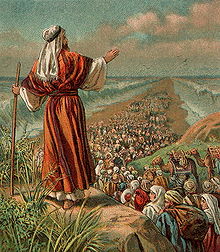
From an early age, I often pondered how such a large group of people could manage to stay organized well enough to leave simultaneously, stay in formation, and manage to not leave some indelible mark on Egyptian history.
As stated in previous posts however, I just simply lacked the drive to do much digging on the topic until my deconstruction began. When I did, I wasn’t too surprised to discover that my internal questions were well justified. The answers certainly point in a particular direction. Let’s explore that here now.
To start with, let’s lay the groundwork for what the traditional interpretation is.
- The number of Israelites leaving Egypt numbered approximately ~2 million in total
- They lived there for ~400 years or so prior to the exodus
- The plagues were real and are what gave them the freedom to leave
- Depending on your source, it occurred anywhere from 1596 B.C. to 1186 B.C. (more on that later)
Something I’ll be frank with is the Egyptian tendency to scrub events they don’t prefer to be remembered from history. They would literally have people go around and grind off past inscriptions. The main way we know this is that…well…they did a rather poor job of it. They forgot to get them all. We also occasionally get the “other side’s take” after supposed overwhelming victories in battle. Turns out some of these overwhelming victories were stalemates at best for the Egyptians.
A series of 10 life altering plagues would give one many reasons to record something, and we do have one single extra-biblical source. The Ipuwer Papyrus.
This document is a bit controversial, but does seem to corroborate a few of the plagues as real events. However it does not mention the Hebrews, or a large group of people leaving Egypt.
Speaking of the Hebrews, let’s talk a little more about them. The supposed 2 million of them.
Anthropologists and Archaeologists have estimated the greater population of the Egyptian country circa the Exodus period at roughly 3 million. There’s a range depending on your source, but that’s about middle of the pack at that number.
Here’s our first big problem. That 3 million was fairly spread out. It wasn’t like all of them were in one big city with the “slaves”. An enslaved population of 2 million would likewise have to be very spread out.
Finally, the biggest sticking point. A population of 2 million leaving, out of a total of 3 million, would be absolutely catastrophic to the remaining 1 million. It’s hard to not see an entire civilization collapse due to this. However Egypt certainly did not collapse and was doing fairly well at this time.
Here I found a number of convincing arguments for a very limited exodus theory.
The word translated as “thousand” can also be translated as a non specific “unit”. Many scholars think due to this, a likely exodus size was more in the 20,000-120,000 range (all-in. Men, women, and children).
This would seem to make sense too, with our previous population issues. However there is even more we can glean from the bible itself.
I will not drive them out from you in a single year, so that the land will not become desolate and the animals of the field become too numerous for you. 30 I will drive them out from you little by little, until you become fruitful and take possession of the land.– Exodus 23:29-30
“When the Lord your God brings you into the land where you are entering to take possession of it, and He drives away many nations from before you, the Hittites, the Girgashites, the Amorites, the Canaanites, the Perizzites, the Hivites, and the Jebusites, seven nations greater and mightier than you” – Deuteronomy 7:1
Anthropologists and archaeologists have estimated that the population of the greater Canaan area around this time was approximately 2 million inhabitants in total. Should Israel actually number ~2 million, it would stand to reason they should be numerous enough to displace the existing ~2 million native inhabitants.
This would seem to be another data point in favor of a much smaller group leaving Egypt.
Now….here’s where we are going to deviate significantly from the original story. Hang on, because this is kind of wild!
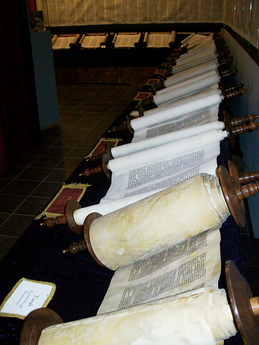
The two oldest texts of the Tanakh (the Hebrew bible) are the Song of Miriam and the Song of Deborah in Judges 5. These texts are quite interesting.
The song of Miriam never mentions Israel. The oldest texts of this song we have simply reference a “people” leaving Egypt. Additionally in these texts God does not lead them to a “land” but to His sacred abode. He plants them in His legacy’s mountain, at His miqedash, where His throne’s platform is. This reference occurs again in King Solomon’s Temple dedication in 1 Kings 8:13. Many of these people also have Egyptian names
The thing to remember here is Song of Miriam = no Israel = God is YHWH
The Song of Deborah, meanwhile, lists all ten tribes of Israel (Judah and Simeon were a separate community at this time and not part of Israel) but doesn’t mention Levi.
The thing to remember here is Song of Deborah = no Levi = God is El
The rest of this theory gets a little wordy and deep. I feel it is legitimate, but for the sake of brevity, I will just drop a link here (https://www.thetorah.com/article/the-historical-exodus) and continue on with a summary. I have used some material from that source here.
The scenario proposed is that the Levites were in Egypt, and it was the Levites who worshipped the God YHWH. The Song of Miriam names God nine times, and in all nine it is YHWH. This name has been found in Egypt in two inscriptions from the 14th and 13th centuries. These Levites brought their story and their God to Israel. The Israel already existing in Canaan. Hence the old song of Deborah, an Israelite song, not referencing Levi…because they weren’t there yet.
Think about it. You are an incredibly violent and powerful clan of elite warriors (Levites). You were actually never enslaved per se, you just served pharaoh as an elite warrior clan. You leave Egypt to follow God’s leading to a promised land and get out from under pharaoh’s influence. You’re a smaller group, so leaving Egypt is much more efficient and less consequential to Egypt itself. No huge vacuum left by millions leaving. You take advantage of some internal power struggles with the timing of your departure. Perhaps even some plagues are at play.
Once in Canaan, you subdue the inhabitants. You’d of course want to rule and not work, so you design a power structure where you are at the top. Tithe flows to you. You reconcile the the Gods YHWH and El. You can’t have two if you are serving the one true God.
You create a history for Israel, to explain how their origin is tied to yours. After all, you saw Egypt create and rewrite history for years. Why not try it yourself? You make sure in this story that the Levite leader, Moses (Egyptian name), is the hero, elevating the Levite.
I know this is a lot to take in at first. It might even sound a little crazy. Give it some time though. Ask yourself, from a purely humanistic viewpoint, what sounds more likely?
Could God not have still parted the sea for 20,000 Levites? Couldn’t the rest of the miracles still apply to a much smaller group, and thereby make the future references to not being numerous enough to fill the land or conquer the natives valid?
I’m struggling with two options here.
1.) It was truly all of Israel that left, but a much smaller group. Perhaps ~100,000 people.
2.) Just the powerful Levite warrior clan left Egypt, conquering Canaan and establishing a new unified history with the native population.
This is the tricky part of deconstruction. What is the truth? I am quite certain it’s not the original story as traditionally interpreted, but pinning down the exact details? Sometimes we just don’t get to know.
This story is foundational to the entire rest of the bible, so I want to approach it with reasonable caution. However, at the same time, I don’t want the weight of a story to weigh on the scale so to speak, influencing my ability to accept an alternative viewpoint.
This story will need a part 2, where we discuss the impacts of accepting an alternative view on the rest of the bible. I’m still brainstorming that. That one is a bit harder to write.
Still searching. Still wondering.
Peace.
 Space For Doubt
Leave a comment