

I remember as a mid 20’s engineer, fresh in my first “real” engineering job, being given a document by an angsty coworker. This document was a huge list of grievances against SDA, Ellen White, and just general biblical failures.
I went through and attempted to answer each one but there were a few I simply had no answer for. None of my usual sources could help. Looking back now I can see it’s because they too didn’t have an answer.
One came to mind recently, the failed Old Testament prophecy against Tyre and Egypt.
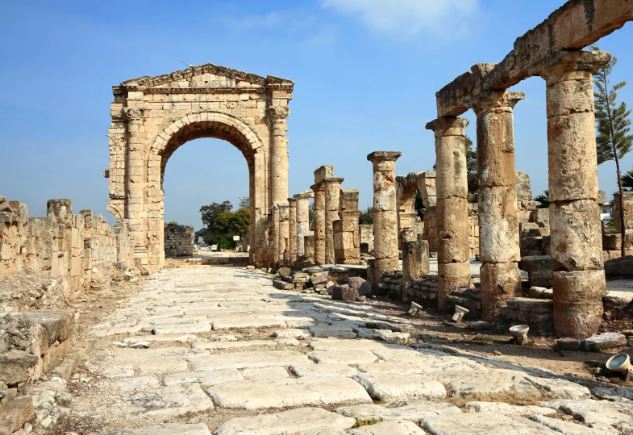
I suppose let’s first get some cliff notes on the Tyre of the old testament era.
Tyre was the Facebook to Jerusalem’s Myspace. Tyre stood to have a lot to gain if Jerusalem ever collapsed, though they weren’t enemies per se. In fact David and Solomon were good friends with Hiram, the king of Tyre. They were both economic powerhouses of the day. Unfortunately since the love of money is the root of all evil (so the saying goes), Tyre looked at Jerusalem’s eventual collapse as good news. They saw dollar signs where the Jews saw blood. They saw investment where the Jews saw captivity.
Ezekiel, having presumably heard of this non-helpful stance from a once friend, was offended at this great evil. It was time to deliver a prophetic hit for such a stance.
For thus says the Lord God: Behold, I will bring against Tyre from the north Nebuchadnezzar[a] king of Babylon, king of kings, with horses and chariots, and with horsemen and a host of many soldiers. 8 He will kill with the sword your daughters on the mainland. He will set up a siege wall against you and throw up a mound against you, and raise a roof of shields against you. 9 He will direct the shock of his battering rams against your walls, and with his axes he will break down your towers. 10 His horses will be so many that their dust will cover you. Your walls will shake at the noise of the horsemen and wagons and chariots, when he enters your gates as men enter a city that has been breached. 11 With the hoofs of his horses he will trample all your streets. He will kill your people with the sword, and your mighty pillars will fall to the ground. 12 They will plunder your riches and loot your merchandise. They will break down your walls and destroy your pleasant houses. Your stones and timber and soil they will cast into the midst of the waters. 13 And I will stop the music of your songs, and the sound of your lyres shall be heard no more. 14 I will make you a bare rock. You shall be a place for the spreading of nets. You shall never be rebuilt, for I am the Lord; I have spoken, declares the Lord God. – Ezekiel 26:3-14
That seems pretty clear. Nothing conditional is present and it’s very specific to who was going to do the destroying (Nebuchadnezzar).
Just one problem. Nebuchadnezzar failed. He destroyed a mainland accessory city to Tyre, and subjected the island fortress that was Tyre to a 13 year siege. However it never fell. Its walls remained strong. Its towers stood tall. His horses never trampled the streets. Tyre’s riches remained within its grasp.
Now the city of Tyre would eventually fall, however it would be at the hand of Alexander the Great roughly 230 years later. That doesn’t really explain the error here.
Ezekiel seems aware of this failed prophecy. Later in Ezekiel 29 we see this:
In the twenty-seventh year, in the first month, on the first day of the month, the word of the Lord came to me: 18 “Son of man, Nebuchadnezzar king of Babylon made his army labor hard against Tyre. Every head was made bald, and every shoulder was rubbed bare, yet neither he nor his army got anything from Tyre to pay for the labor that he had performed against her. 19 Therefore thus says the Lord God: Behold, I will give the land of Egypt to Nebuchadnezzar king of Babylon; and he shall carry off its wealth[d] and despoil it and plunder it; and it shall be the wages for his army. 20 I have given him the land of Egypt as his payment for which he labored, because they worked for me, declares the Lord God. – Ezekiel 29:17-20.
Neither the King nor his army ever got any of the great wealth or spoils of war, because they did not win that war. Ezekiel in turn promises him Egypt. In fact he also makes some bold predictions.
9 and the land of Egypt shall be a desolation and a waste. Then they will know that I am the Lord. “Because you[c] said, ‘The Nile is mine, and I made it,’ 10 therefore, behold, I am against you and against your streams, and I will make the land of Egypt an utter waste and desolation, from Migdol to Syene, as far as the border of Cush. 11 No foot of man shall pass through it, and no foot of beast shall pass through it; it shall be uninhabited forty years. 12 And I will make the land of Egypt a desolation in the midst of desolated countries, and her cities shall be a desolation forty years among cities that are laid waste. I will scatter the Egyptians among the nations, and disperse them through the countries.– Ezekiel 29:9-12
Unfortunately for Ezekiel, this too never happened. Nebuchadnezzar attempted to enter Egypt but was defeated at its border. It has never been desolate, much less for 40 years. (Or however long 40 was symbolic for)
I’ve heard some theories that these were conditional prophecies. I’m not a theologian, but I really struggle to find anything conditional here. It doesn’t really seem to fit the stereotype of such.
I’ve heard the “well it was eventually destroyed” (referring to Tyre). Ok sure. Many cities were destroyed at some point in their history. That time period was just a rough time to be alive. Are we to just overlook the whole Nebuchadnezzar-specific thing? What about the never being rebuilt thing?
Egypt was probably the most stark prophetic failure. That was never laid waste. It has never been desolate. Are we supposed to just turn a blind eye to that too?
We’re left with a choice now. Did God fail in fulfilling His prophecy? Was His dictation to the scribe for this prophecy not accurate? Or…and really hear me out here…was this just a hit piece by an upset Bible writer that wanted Tyre to burn? That wanted retribution on Egypt for their many sins?
Remember when I wrote about the verse concerning God-inspired scripture? How there was room, in my opinion, for something not God-inspired? This sure seems to fit the bill.
The failure here leads me into the next point I want to make. The False Choice. Perhaps a better common term is the False Dilemma Fallacy.
A false dilemma fallacy, also known as a false dichotomy, false binary, or “either-or” fallacy, is a logical fallacy that occurs when someone presents only two options or sides to an issue, when there are actually more.
We are bombarded by the false dilemma fallacy from a very early age. By a world filled with people who cannot deal with anything but black and white. At least not comfortably that is, and people hate being uncomfortable. They hate uncertainty.
When there’s only two choices, everyone that is not on your side is automatically making a bad choice. Thus they are easy to vilify. (This sounds super familiar…)
Growing up I felt I had two options when it came to the bible.
1.) The bible was inerrant. All things in it must be true, whether they be literal or symbolic for a future prophecy. Who got to determine whether a text was supposed to be literal or symbolic was never clear. It was never the common man, that was made certain.
2.) The Bible was not worthy of the paper it was printed on and may as well be thrown out.
That was it. There was no grey. If you started to make a suggestion that #1 may not be 100% accurate, you’d be threatened by the powers that be that #2 was your only option then. Essentially the feeling I always had was either I got behind #1, or choose #2 and become a debased and morally bankrupt atheist.
Thankfully that’s not the world we live in. Thankfully more and more people are starting to understand that when it comes to the bible, we have more than just those two choices.
Peace
 Space For Doubt
Leave a comment