


A few months ago I wrote a piece titled The Failed Prophecy and the False Choice. I ended it with the conclusion that we live in a world where we have more than just two choices when it comes to the bible. What I didn’t do was elaborate on that.
To quickly sum up the false choice we’ve been faced with looks like this.
1.) Either the whole bible is true and inerrant, we believe it and we are saved.
or
2.) It has no value at all. We are failed, morally bankrupt, and lost souls because we do not believe wholeheartedly in #1.
That’s more or less what traditionalists have espoused, albeit in not as frank language. That’s what many of us have had drilled into our heads since our earliest memories were formed. I think a majority of Christians still feel chained by this false choice today.
Thankfully this is not where the story ends. It’s not the only two choices. It seems like a good time to look at what that third option might be. I’ll share my own viewpoint and maybe something in there will ring true for you as well.
The ultimate question is did God actually inspire this Bible? I think the answer is yes. At the same time it seems foolish to think that just because the answer is yes, means that we can definitively know what He meant.
That’s a hot take. Let me explain a little more.
The longer answer is the Bible is inspired by God, but the degree to which the end result reflects the true desires, character, and will of God is (in my opinion) largely unknowable. God’s character and behavior were reimagined by the authors of the bible at multiple points throughout its history. Within this book we see massive changes in how this God was perceived.
For example:
In the Old Testament, all evil is attributed to God. I’ve shown this via scripture before in previous posts.
In the New Testament, all evil is attributed to the newly minted concept of Satan (developed in exilic and post-exilic, but pre-Jesus time period).
God is (presumably) unchanging in His nature. It was the people’s understanding of Him that changed. Thus we see the reimagining of His character and attributes by the people realizing, no, God can’t be the one to send all this evil all our way. To tempt us and undermine His own children’s progress doesn’t make sense.
Just as our understanding of people changes the better we know them, even after decades, our understanding of God should not remain static. As we come to understand more about history and creation itself (biology, physics, psychology, etc), our understanding of the God who authored creation itself would necessarily have to change. If it didn’t, I’d be seriously concerned at our critical thinking skills.
It is this reimagined understanding that results in things like the change from a pro-slavery stance (very biblical) to an anti-slavery stance (very modern).
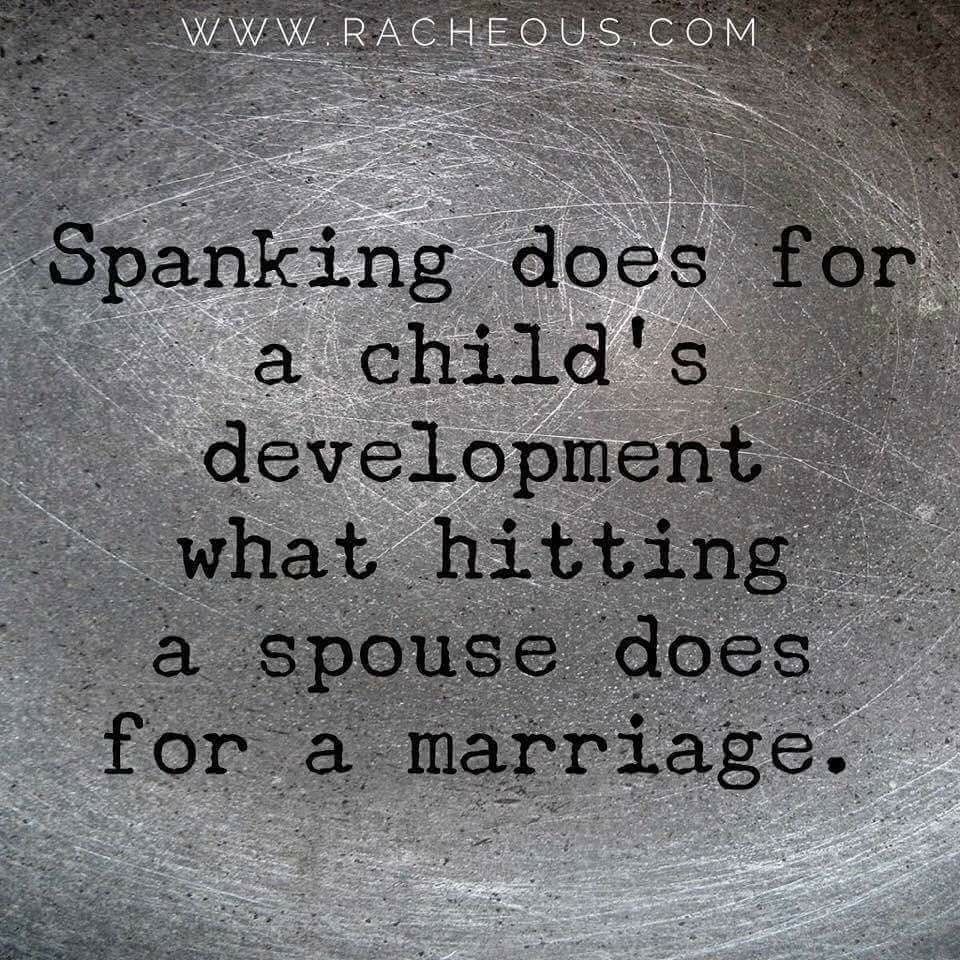
It is this change in understanding that should drive us to look at the spirit of the law and not the letter of the law. A great example is our modern understanding of psychology. The bible prescribes beating your kids. There’s no way around this, it simply does (proverbs 13:24, proverbs 23:13-14, Proverbs 29:15, Proverbs 22:15, and so on). Despite this, the majority of people in the USA and other developed first world nations today, do not beat their kids. Our understanding of mental health and childhood development naturally overrode the text. Our understanding changed to reflect that it is more likely God wants mentally healthy and independent children than broken, unstable, violent and unwell kids that result from being beaten during childhood.
Why should we operate under the assumption that our knowledge of God must remain fixed to the time period in which the bible was written? Fixed to a specific set of texts? Who are we to assume inspiration stopped after the last letter stroke in revelation was complete? Wouldn’t that assumption limit the sovereignty of God?
The bible is truly a masterpiece of literature. For how many hands contributed to its completion, and the time period in which it was authored, to me reveals the impressiveness of the final result. That’s one small piece of why I think it has some inspiration behind it. Yet within this same bible, there are many internal disagreements, many clear scientific inaccuracies, many externally provable falsities, and many morally and ethically bankrupt portions.
It’s truly a wondrous yet confusing book.
What we’re left with today is a text that definitely seems inspired in some capacity but clearly was not written for us in our modern times. It was written by an intensely primitive society that we would be appalled at today. A society that is completely fine with plagiarism, reattributions, misogyny, racism, violence, genocide, slavery, etc. (To be fair many Christians today are still fine with misogyny, violence, and racism, but that’s a topic for another day)
Apologists will go to great lengths in attempt to white-wash these facts, but they are indeed facts. No serious biblical scholar will dispute any of that, only apologists pushing an agenda.
I don’t think God overrode human free will at any point during the authoring of the texts. As a result, it is no burden to accept the presence of errors. It is no burden to think that some things may be impossible to know definitively due to faulty humans writing it. I never feel compelled to become an apologist and explain away things that are abhorrent in the bible under some bizarre legalese of hermeneutics. I can simply say…yes that is wrong. It is wrong now and it was wrong then too.
I’m not saying we should give up on attempting to understand the bible. I AM saying we should let reason, logic, science, ethics, morality, and love have a seat at the table when attempting to derive scriptural interpretation. A face value reading will fall flat, if for no other reason than we aren’t reading it in the original time, language, and setting in which it was written. If clear meaning was obtainable by a face value reading, we wouldn’t have hundreds (if not thousands) of denominations of Christianity today.
We can understand many things the bible says as descriptions of what was, and not prescriptions for what is to always be. We can understand that a loving God who made us in His image, would want us to use that very fact to reimagine our understanding of Him as we learn more about ourselves.
We can let our trust in a loving God shape our faith. We can let our trust in a loving God shape how we make sense of this fascinating, bizarre, confusing, frustrating, and humbling book we call the bible.
Peace.
 Space For Doubt
Leave a comment