
There is nothing quite as comical as Godzilla frog coming your way this time. I wish everything could be that exciting, but sometimes we need a little B-roll footage to really appreciate the A-team’s contributions.
We last left off with the plague of insects. Let’s carry on.
Livestock Plague
So the Lord did this thing on the next day, and all the livestock of Egypt died; but not one of the livestock of the sons of Israel died. – Exodus 9:6 NASB
Yikes. All the Egyptian livestock. That includes all animals of consumption, agricultural work, and transportation. Basically all domesticated animals.
All of Israel’s livestock were untouched. Not one died. Lucky break! Although if they were slaves it’s hard to see how they had anything that was “theirs.” (we’ll get to that later)
Pharaoh’s sorcerers were like “…..Pass. We’re not even going to bother Hathor. We hate that lady.”
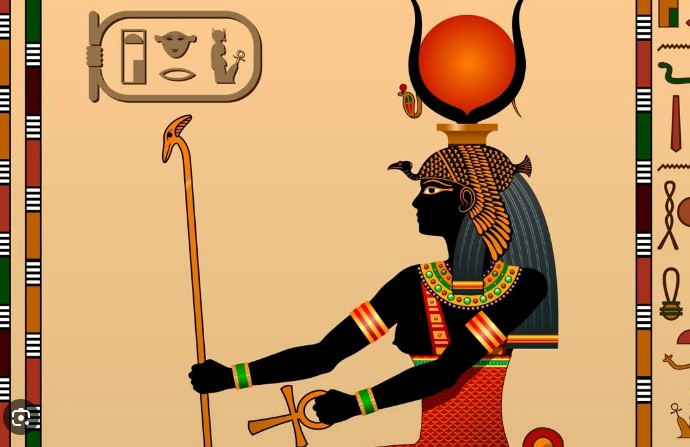
Hathor was the goddess of motherhood, love, joy, and fertility. She was also helped the soul make a smooth transition to the afterlife. Hathor was represented as a cow because, as the sky goddess, she was associated with the Milky Way. Its light was the milk from Hathor, the heavenly cow that sustained all human life, but especially the life of the pharaoh. – Study.com
The death of a slew of animals is pretty much in opposition to fertility. All the cows dying would especially be a sore subject for Hathor fans.
Boils
So they took soot from a kiln, and stood before Pharaoh; and Moses tossed it toward the sky, and it became boils breaking out with sores on every person and animal. – Exodus 9:10 NASB
I get the every person bit here, but what animals? Wild animals? That seems a bit unnecessary. Like…that was the thing that would convince Pharaoh?
“I can handle my livestock dying, the frogs, the blood, but you hurt a wild squirrel? You’ve crossed the line pal! I yield!” – Pharaoh…hopefully.
Pharaoh’s magicians said they weren’t paid enough to come to work sick, so no dice on pleading with the deity Isis here.
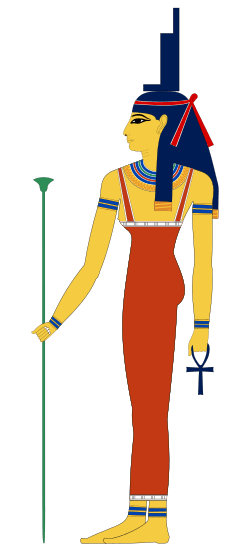
Great mother Isis, the goddess of healing and magic, – Egyptian Museum Website
By giving everyone boils, they are really sticking a fork in the eye of Isis. Maybe Pharaoh should’ve given his magician’s hazard pay to show up despite the circumstances?
What’s weird about this plague is that it just stops on its own without any pleading from Pharaoh. We are not informed of the duration of this boil torture, however I’m going to have to say…I feel like this would’ve worked just given more time. Everyone presumably has a limit for how long they’d want to coexist with a multitude of festering flesh wounds.
Hail
Tomorrow at this time I will cause the heaviest hail to fall that has ever fallen in Egypt from the day it was founded until now. Send, therefore, and have your livestock and everything that you have in the open field brought to a secure place; every human or animal that is in the open field and is not brought under shelter will die when the hail comes down upon them.’ ” – Exodus 9:18-19 NASB

Moses, my man. You already killed all of their livestock. Also…we’ve got some additional problems here.
Then Moses stretched out his staff toward heaven, and the Lord sent thunder and hail, and fire came down on the earth. And the Lord rained hail on the land of Egypt; there was hail with fire flashing continually in the midst of it, such heavy hail as had never fallen in all the land of Egypt since it became a nation. The hail struck down everything that was in the open field throughout all the land of Egypt, both human and animal; the hail also struck down all the plants of the field and shattered every tree in the field. Only in the land of Goshen, where the Israelites were, was there no hail. – Exodus 9:23-26 NASB
Hail plague problems:
- The hail shattered every tree. This would truly be some apocalyptic level size hail. At least grapefruit size or bigger for sure.
- How would the simple shelters of the people at the time have survived this? Hail large enough to punch through modern roofs?
- Verse 32 records the wheat and spelt as not being ruined by the hail because they “harvest late.” Excuse me? Have you seen the damage that even grape size hail does to tender young plants? I have. Hail the size that shatters trees is going to kill it all. Don’t let some commentaries fool you here. Only a few get this right. These crops are a month behind ripening, not still underground. #Ididmyresearch
- Again with the livestock. At least there are some reasonable arguments to be made here.
- Egyptians just stole some (but not all) livestock from Israel after theirs died in the previous plague
- The word “all” didn’t mean truly all
- Both could be equally true here, or both could be false. It could simply be a tall tale not told well. (that has a little tongue-twister vibe to it)
Pharaoh sends a messenger out (in the hail?) to go get Moses and Aaron. They come (in the hail?) and meet with Pharaoh, who pleads with Moses to call it off. All the thunder and hail stops.
Pharaoh’s sorcerers have likely either skipped town or been unalived for their failure. We don’t see them here and won’t see them again.
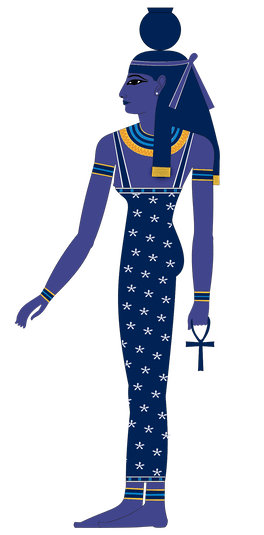
Nut (Nuit) was the Egyptian sky Goddess. Unfortunately for the Egyptians, she was MIA on this one. To be fair though, no one called…so that’s a little on them.
Pharaoh rightly and quickly concedes defeat, but still has that hardened heart issue.
Locusts
So Moses reached out with his staff over the land of Egypt, and the Lord directed an east wind on the land all that day and all that night; and when it was morning, the east wind brought the locusts. The locusts came up over all the land of Egypt and settled in all the territory of Egypt; they were very numerous. There had never been so many locusts, nor would there be so many again. For they covered the surface of the whole land, so that the land was darkened; and they ate every plant of the land and all the fruit of the trees that the hail had left. Therefore nothing green was left on tree or plant of the field throughout the land of Egypt. – Exodus 10:13-15 NASB
The last plague shattered every tree of the field, but somehow there is still fruit on the trees? Tree-shattering hail seems like a pretty big game-ender for fruit hanging from trees.
A few commentaries mention that “all” and “every”(kōl) do not actually mean all and every, but indeed are used like we often use them today. I’m not sold on this, as some commentaries wrestle with this inconsistency. Just because we use a word in a certain way today, doesn’t necessarily mean that’s how it was used 3000+ years ago in another language. More on this later.
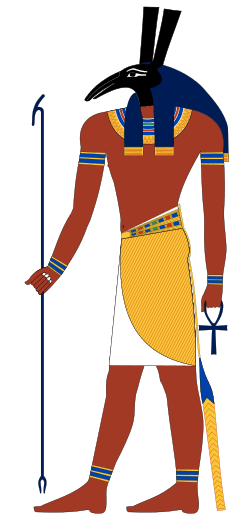
Set (Seth) is a god of deserts, storms, disorder, violence, and foreigners. – Wikipedia
It’s getting pretty bad out there. Nothing green is left. Just an expanse of sand and death. Set has been put in his place. His ability to control disorder and chaos has been soundly undermined by this locust swarm.
Moses has God blow away the swarm and remarkably, “not one locust was left in all the territory of Egypt.” – Exodus 10:19 NASB
Egypt is naturally home to locust, so similar to the flies, was there this period where no locust existed there. Everything green would already be gone I suppose so why stay?
Darkness
Then the Lord said to Moses, “Reach out with your hand toward the sky, so that there may be darkness over the land of Egypt, even a darkness which may be felt.” So Moses reached out with his hand toward the sky, and there was thick darkness in all the land of Egypt for three days. They did not see one another, nor did anyone rise from his place for three days, but all the sons of Israel had light in their dwellings. – Exodus 10:21-23 NASB
Chasing this down in the Blue Letter Bible study app (highly recommend this), the word for dwelling (môšāḇ) can also mean dwelling place in a geographic sense. That is indeed what the commentaries and some versions portray.
Due to the darkness that “may be felt,” the main consensus view is that this darkness was most likely the following:
Khamsin is a dry, hot, sandy local wind affecting Egypt and the Levant; When the storm passes over an area, lasting for several hours, it carries great quantities of sand and dust from the deserts. – Wikipedia
We’re talking about the mother of all sand/dust storms. Essentially a maximally extreme version of the Khamsin is brought upon the land of Egypt, but not affecting the area of Goshen.
Just a simple darkness (I.E. solely lack of light) doesn’t contextually fit here as they had torches and candles. It would be easy enough to light some up and go about your business. However, an unparalleled dust storm would absolutely keep you in your place and make candle use impractical.
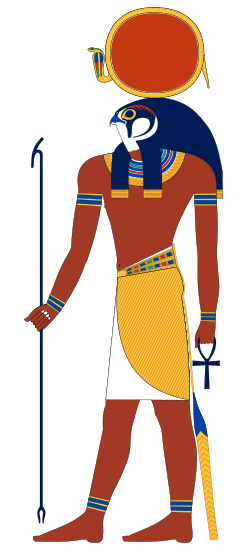
Ra was the God of the sun, but his kingdom included the sky as well. For a dust storm to blot out the sun and take over the sky, without his intervention, would be a humbling event.
Pharaoh pleads for intervention from Moses and he gets it. By this point he has had enough of these shenanigans, and says the following:
Then Pharaoh said to him, “Get away from me! Be careful, do not see my face again, for on the day you see my face, you shall die!” Moses said, “You have spoken correctly; I shall never see your face again!” – Exodus 10:28-29 NASB
Things are getting spicy. No more standing on ceremony. No more good sportsmanship.
To wrap this section up, I want to leave you with the following thoughts. According to this story, the state of Egypt is as follows:
- Virtually all animals to get sustenance from are dead (those pesky livestock…ya they still aren’t all quite dead. We’ll get to that in part 3)
- All the plants that provide food for both people and animals alike are gone
- All the trees are dead or gone entirely
- Egypt has no resources other than what little may be laying around in storage
- Future agricultural yields are months away at best
- Animals would need to be acquired in mass, and in very short order from neighboring nations
- This would bring Egypt to its knees in terms of military and economic power
- Any other outcome than rapid and total societal collapse is hard to imagine (we’ll discuss that too)
I’ll end here because this is again getting long. Part 3 will have the last plague, the main issues, and a few concluding thoughts.
 Space For Doubt
Leave a reply to Biblical Mythbusting: A Repository of Greatest Hits – Space For Doubt Cancel reply