

For the visual learners out there, here’s a few graphs to help make sense of the deconstruction process.
As an engineer, I occasionally have to make graphs to describe unconventional data for my projects. Sometimes a little humor slips in, to the laughter of the leadership team. People tend to approve projects more easily when they’re laughing. 😅
There’s no hard science here (except at the very end), so consider this as authoritative as the napkin math engineers use to quickly assess the viability of an idea. It’ll get you in the general ballpark of truth.

I rarely read the Bible anymore. It wasn’t helping me understand anything. Most deconstructionists wind up doing pretty heavy extra-biblical reading.
The Bible is a translation of a translation, revision upon revision, and written in a cultural context we have no experience in. This is where extra-biblical reading becomes key to understanding what the authors actually meant. Sometimes what we read in English is not anything remotely similar to how the native language would have been understood in those times.
A person could have the entire Bible memorized and still completely fail to understand it within its original context.

This one is basically the Dunning-Kruger effect. Everyone sheltered (knowingly or not) within a specific denomination’s dogmatic view of scripture, thinks they know scripture. They think they’ve unlocked all the hidden* secrets of the Bible.
They don’t even know what they don’t know. Exposure to differing ideas is fun and rewarding. If your interpretation is so perfect and true then don’t worry about it, as academia will surely validate it. (winks at the fundies)
Deconstructionists spend a lot of time and energy discovering what they don’t know. It’s hard work filling in those voids with knowledge.
*Nothing is “hidden” by the way. Sometimes the meaning of something is lost, but it’s not like…conspiratorially hidden from understanding by some divine force. There’s no raiders of the lost ark meets national treasure hunt that can be done to figure it out. We’ve just simply lost the meaning the author intended over time. People love to conjure up meaning to make something relevant to their time period, but that’s all it is.
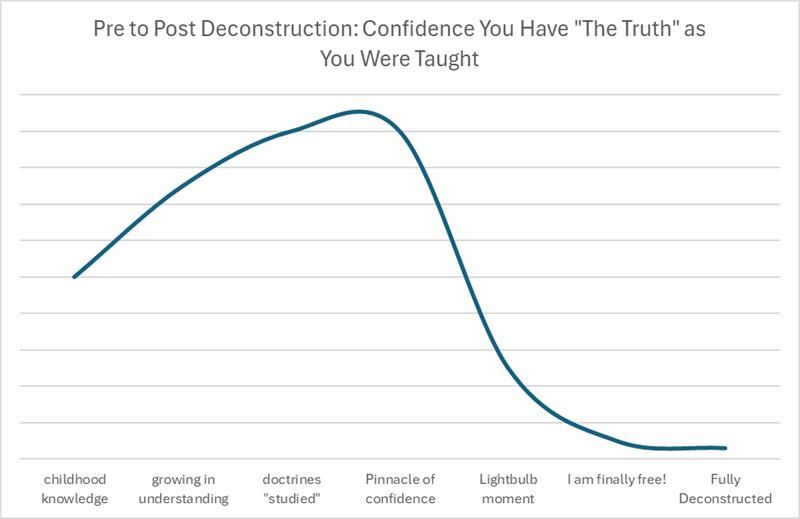
Ah the pinnacle of ignorant confidence in possessing the truth. I think many deconstructionists have experienced a time in their former life when they have felt this way. I’m embarrassed for my former self. I was guilty of judging others when they didn’t live out “our” beliefs exactly how we were taught. There’d be a few apologies in order if going back in time was an option.
It’s that lightbulb moment where everything changes. The moment when the gears grind to a halt, and suddenly everything you thought you knew is now dethroned from its pedestal of “truth.” That’s when the confidence is shaken beyond repair. You will never believe in this version of “truth” again. You simply can’t un-know, un-see, or un-experience what brought you to this “aha!” moment.
It’s only when your confidence in possessing the truth has been dismantled, that the mind can be free to accept new knowledge. Blind devotion and ignorance was mistaken for truth, and wound up causing one to miss the forrest for the tree.
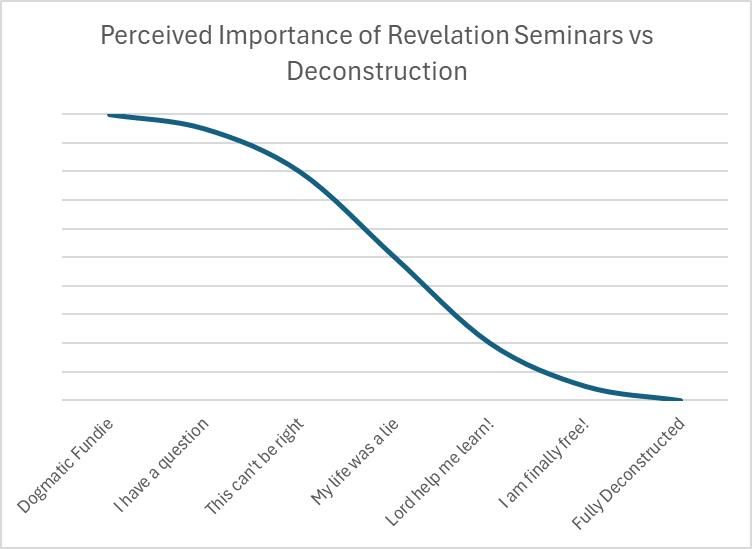
This may be more of an SDA thing. To be fair, most millennials/Gen Z SDAs probably never thought another revelation seminar was ever necessary, even as fundamentalists.
Growing up, this fear-based preaching was ingrained into us. Our parents’ generation thought this was somehow the way to win souls. Turns out it did work (a little), but the prize was mostly conspiracy theorists and crazies. Play stupid games, win stupid prizes. As the saying goes “you catch more flies with honey than vinegar” and boy does that church love the vinegar!
The SDAs have some very peculiar takes on the end times that are…well…they are something. Words like “creative” and “great artistic license” come to mind.
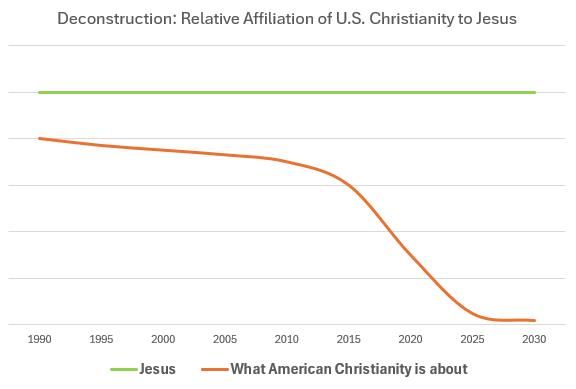
This one isn’t a shocker to anyone with functioning eyes/ears, access to the news, and a basic understanding of Jesus.
There’s nothing that resembles Jesus remaining within the majority of U.S. Christianity. There are plenty of good Jesus focused people left inside it who are horrified by what’s happening, however they unfortunately are in the minority. You might even find a whole church here or there that is mostly composed of these good people. However, the damage to the term “Christian” is already done. The world sees it for what it has become, not what it should be.
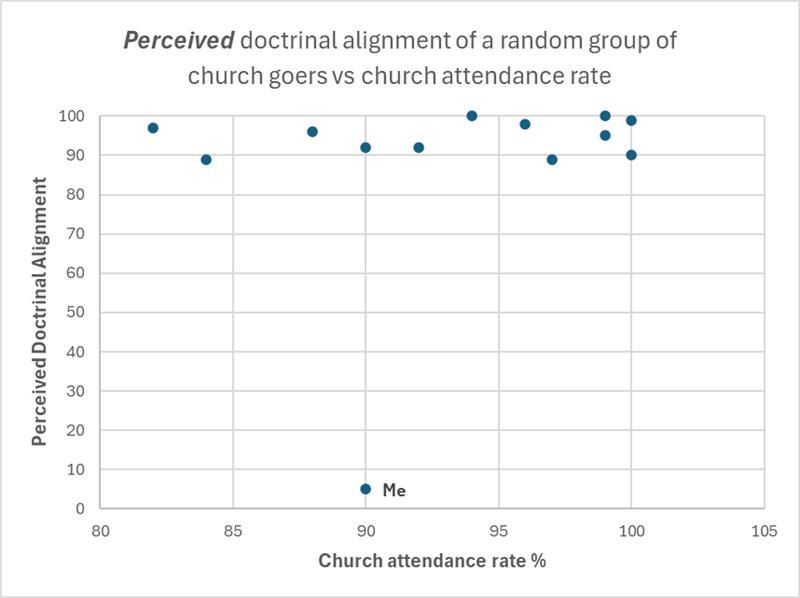
For a long time, I thought most people in church were a monolith of doctrinal agreement, and that I was the outlier. How wrong I was! It wasn’t until deconstructing and the conversations that followed, that the truth was revealed. Relatively few people actually wholeheartedly buy into all the doctrines 100%. Many people hold few or even none as true, they just attend for the community*. (see below graph)
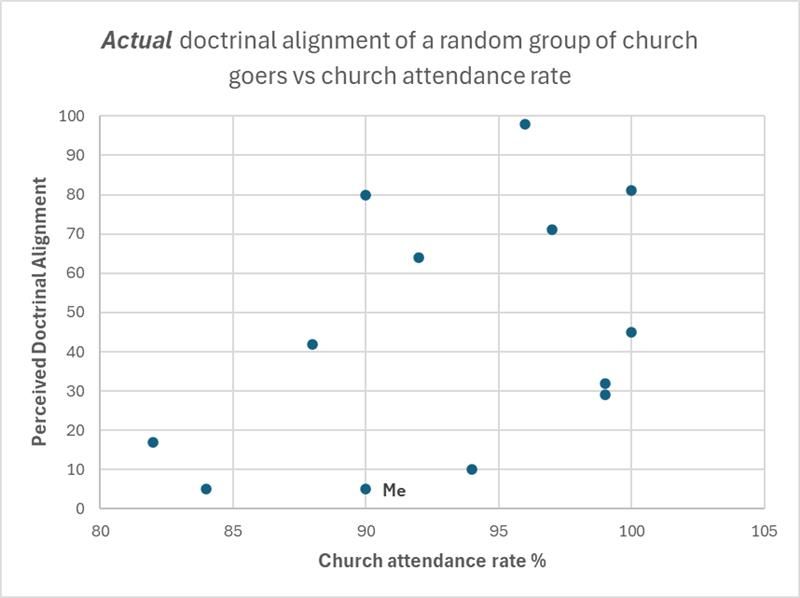
At this point I’d wager less than half of the church my family and I attend is in full doctrinal alignment. Another sizable chunk can’t be bothered to care one way or another. It’s just something they do to check a box, actual conviction is irrelevant. Perhaps 20% of the people hold relatively little, if any, as true. My sample size isn’t great I’ll admit. I’m deriving broad statistics from a group of perhaps three dozen people, and from a somewhat progressive church.
*By church attendance (in my case) I mean Sabbath School. The church service itself feels about as comfortable (physically, emotionally, and spiritually) as a jacket made of live bees. The community makes it what it is, hands down.

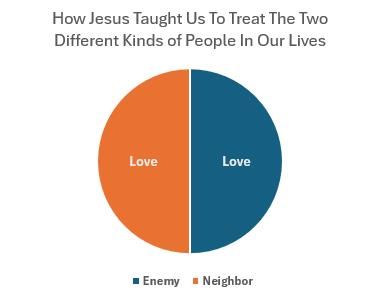
If you’ve made it through the deconstruction process with some semblance of faith intact, you probably find this to be the most compelling doctrine a person could hold. How we treat others. It also happens to be the one Jesus seemed to care the most about.
This is where the largest contrast between U.S. Christianity and Jesus is seen by the world, and it’s that contrast that drives many away forever. (Or keeps them from joining in the first place)
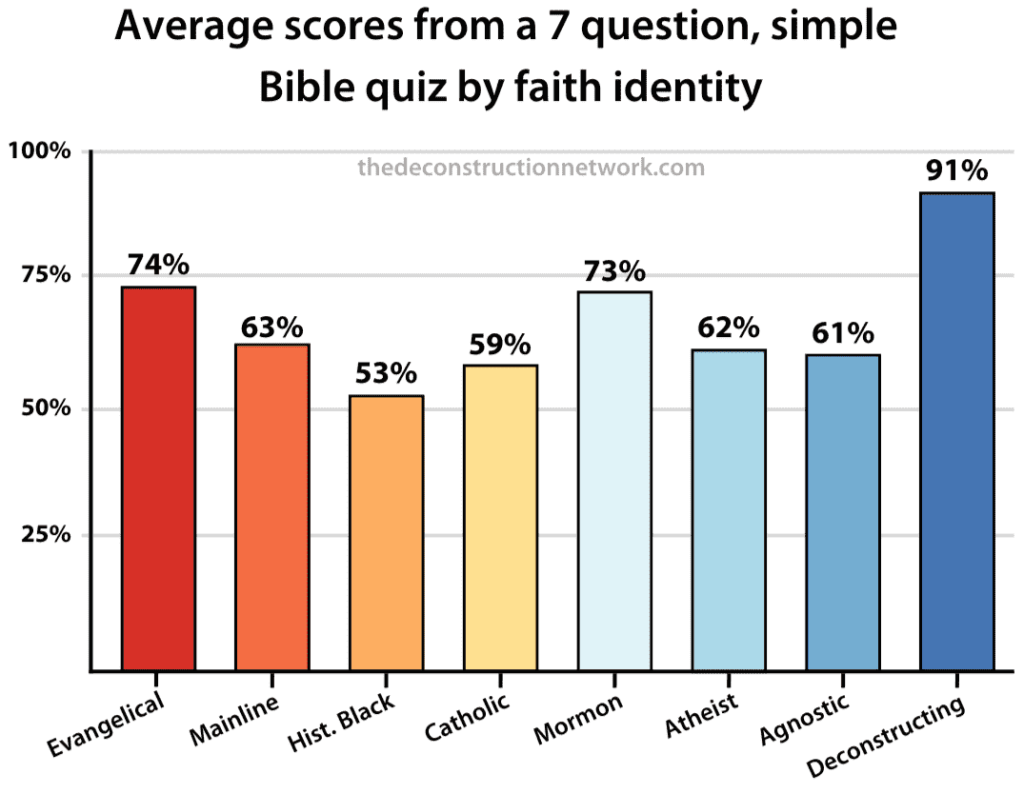
This one isn’t made by me. A therapist specializing in religious deconstruction conducted a study with a sample size of 1657 people identifying as “deconstructing.“
The researcher, Phil Drysdale, used the same questions that a 2019 Pew Research Center study asked of other religiously affiliated people.
The comparison shows that on average, those who deconstruct know their Bibles better than those who don’t.
If you’ve spent any time on forums where deconstructionists frequent, this isn’t surprising. Reddit, hermanutics.stackexchange, etc, are filled with people who have fully or partially deconstructed and are clearly well informed of what their Bibles say. (That’s…probably one of the main reasons why they are deconstructing!) I’d even go so far as to say many are absolutely brilliant amateur Bible scholars. A few run YouTube channels I follow.

Fundamentalists don’t particularly enjoy this bit of truth. Then again, many fundamentalists often can’t even fully explain the doctrines they are defending. As you can imagine, defending something you don’t understand results in rather silly arguments, and there’s no shortage of that! That’s probably why there is a strong desire to keep people within the sphere of educational influence of one’s particular religious affiliation. (See also: Indoctrination)
KISS – (Keep It Simple, Stupid!)
I hope this crude crayon drawing visual guide to deconstruction was beneficial. Your experience may differ. This isn’t meant to speak for everyone but perhaps it might bring a little clarity and peace to some.
Lotus (racing car company) founder Colin Chapman’s approach to building cars was ”Simplify, then add lightness.” Sometimes the deconstruction process is just as much about casting off the weight of unsound doctrine and unnecessary complexity, as it as about finding “the truth.”
Jesus is simple. As much as we try to complicate religion and morality, Jesus really dumbed it way down for us. 10 commandments boiled down into 2, that if followed, results in it being pretty hard to go wrong.
Deconstruction feels like a desire for that simplicity for me.
Here’s to simple.
Peace


Leave a Reply