

A few weeks ago I got into a discussion about prophecy, what it actually is, and how to “test” it. In light of my ongoing months-long caffeine-fueled binge of Daniel and Revelation, it seemed like a good topic to explore.
You’ve probably heard this line before.
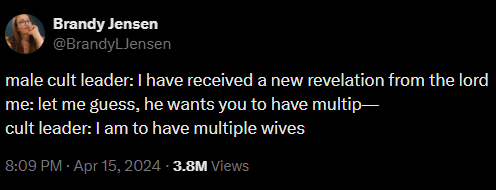
All prophecy must be in harmony with the scriptures.
That sounds great at first glance, but think about it for a minute. What exactly does that mean?
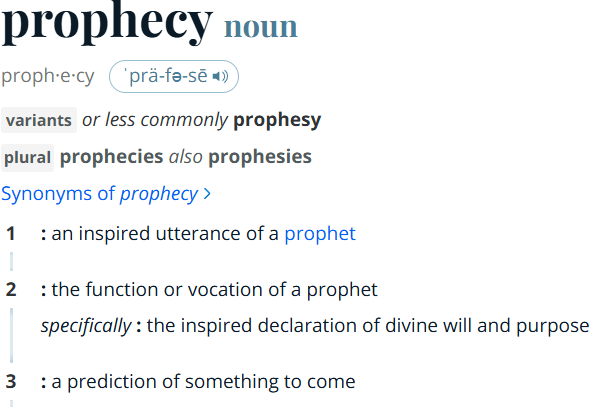
Prophecy rightly encompasses more than just future predictions. It means to be God’s mouthpiece. A prophet delivers divinely inspired messages to the people.
These messages could be life guidelines, new rules, new directives, etc. They don’t have to be solely limited to future events. That being said, there’s not a great way to “test” these types of messages.
Think of the biblical prophets, and how they would communicate things to the people. The people of the day were largely illiterate. They had no Bible. What were they supposed to “test” these messages against? Sure some later Old Testament authors may have had a copy of earlier manuscripts, but the classification of what was authoritative or “inspired” looked a lot different back then.
Let’s say Bob (Old Testament prophet) told the people they should venture into the desert three days journey to celebrate a new festival to God. How were they supposed to “test” this prophetic word? Consulting older scriptures, even if they could, would serve no use here. It doesn’t conflict with who God was imagined to be (and even that was fluid). It is simply a directive that is claimed to be from God.
Prophecy in this case is untestable. It doesn’t agree or disagree with any previous directives.
Prophecy then, at least as far as can be “tested,” is rather limited to future event prediction accuracy and harmony with prior understood theology (if applicable). Since that theology can be somewhat fluid in the Bible, we practically have the case where prophecy mainly encompasses future event prediction. The priests could teach. The scribes could write. The elders could provide counsel. The prophets? They could deliver future predictions.
Imagine it this way. A bus driver can be many things. They can be counselor, protector, mechanic, etc. However, they are known for their primary calling, bus driving. In the same way, prophets are usually known for their future event prediction.
This is how prophecy is viewed today, as it gives people something to ascertain its legitimacy.
A good chunk of future-event prophecy in the Bible had nothing to do with any other part of scripture.
- Elijah prophesying that oil and flour wouldn’t run out? Literally has nothing to do with anything else in scripture. [1 Kings 17]
- Elisha prophesying that Israel would defeat every last Moabite stronghold? Nothing to do with any other scripture. (It also was a failed prophecy) [2 Kings 3]
- Jeremiah’s failed prophecy against the Egyptian city of Memphis? I struggle to find how this particular prophecy lines up with anything else. [Jeremiah 46]
Most prophetic predictions by Bible prophets have nothing to do with the rest of scripture. There’s no other reference to benchmark it off of.
These prophecies are only scripture, because the stories were included in scripture. On their own they do nothing to reinforce or diminish any revelations about who God is, the rules God set forth for His people, God’s divine plan for salvation, developing doctrines, etc. In fact, with the failed prophecies, I would argue that would be a case against God’s sovereignty (If that prophet/prophecy is to be accepted as true that is).
A modern-day prophecy of the downfall of Russia to Ukraine (or vice versa) would have no relevance to scripture. It’s not “testable” to the scriptures. There’s no way to use the Bible to validate or invalidate the legitimacy of this prophecy. The sole way to test this prophecy is to watch if it comes true.

There are of course many unprovable instances of prophecy, like that example of Elijah and the oil/flour. There’s no way to confirm these stories beyond what is stated in the scripture itself. We have to either trust that the Bible is true, or it’s not. Archaeology can’t come to our rescue here. However, there are many many instances where the Bible’s prophecy just objectively doesn’t happen. We even have an example in Ezekiel where Ezekiel himself acknowledges HIs previous prophetic failure! (See my post on that here)
Ultimately, quite a good chunk of plausibly provable Biblical prophecy fails. This is confirmed by the Bible’s own admissions or via archaeological evidence, and it’s here that apologists come out in full force.
This isn’t just a casual denial of reality, but an unhinged apologetic gymnastic session that breaks the laws of physics. We don’t need to concern ourselves with the interim arguments, as here’s the position that they ultimately retreat to. They will claim that all prophecy is conditional or that it is symbolic. That’s the get-out-of-jail free card.

However…and this is important…that benefit of the doubt is ONLY available to Biblical prophets. (And Ellen White for SDAs) See my below response to a post on prophecy by the Adventist Theological Society (ATS) on Instagram.
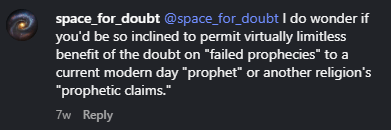
We should be fair right? If a modern day prophet claims to have prophetic messages from the Christian God, we should extend the same benefit of the doubt if their prophecy seems to have failed right? I get that one would dismiss other religions out of hand, but that too seems a little unfair. Why could Got not work through them too? What if their prophecy did align with scripture? 🤔

Their response to my comment gave away their hand. First off, they gave a meaningless statement as plenty of prophetic claims are not testable by the scripture. Second, their own “prophet” fails here, several times actually! Not only are some of her prophecies not testable via scripture, they just straight up fail. Third, they go on record as saying they would not afford this benefit of the doubt to any other modern day prophet.

Testing Prophecy?
In light of my discussion with ATS, let’s look at the SDA church’s approach to prophecy. We’ll use Ellen White’s 1856 vision and her Civil War prediction as the two test cases.
Test case #1: The 1856 vision of EGW
“I was shown the company present at the conference. Said the angel, ‘Some food for worms, some subjects of the seven last plagues, some will be alive and remain upon the earth to be translated at the coming of Jesus.’” – EGW 1856 [This obviously failed]
Test case #2: The Civil War prediction
“There is not a person in this house who has even dreamed of the trouble that is coming upon this land. People are making sport of the secession ordinance of South Carolina, but I have just been shown that a large number of states are going to join that state and there will be a most terrible war.” -EGW January 1861 [The dialogue goes on, but all you need to know is she predicted the Civil War a meager 3 months ahead of time. The conflict was already nearing a boiling point at this stage, in part due to the election of Abraham Lincoln in 1860.]
Now that we have our test cases, let’s see how the SDA church would “test” this prophecy, according to their own standards.
Test 1
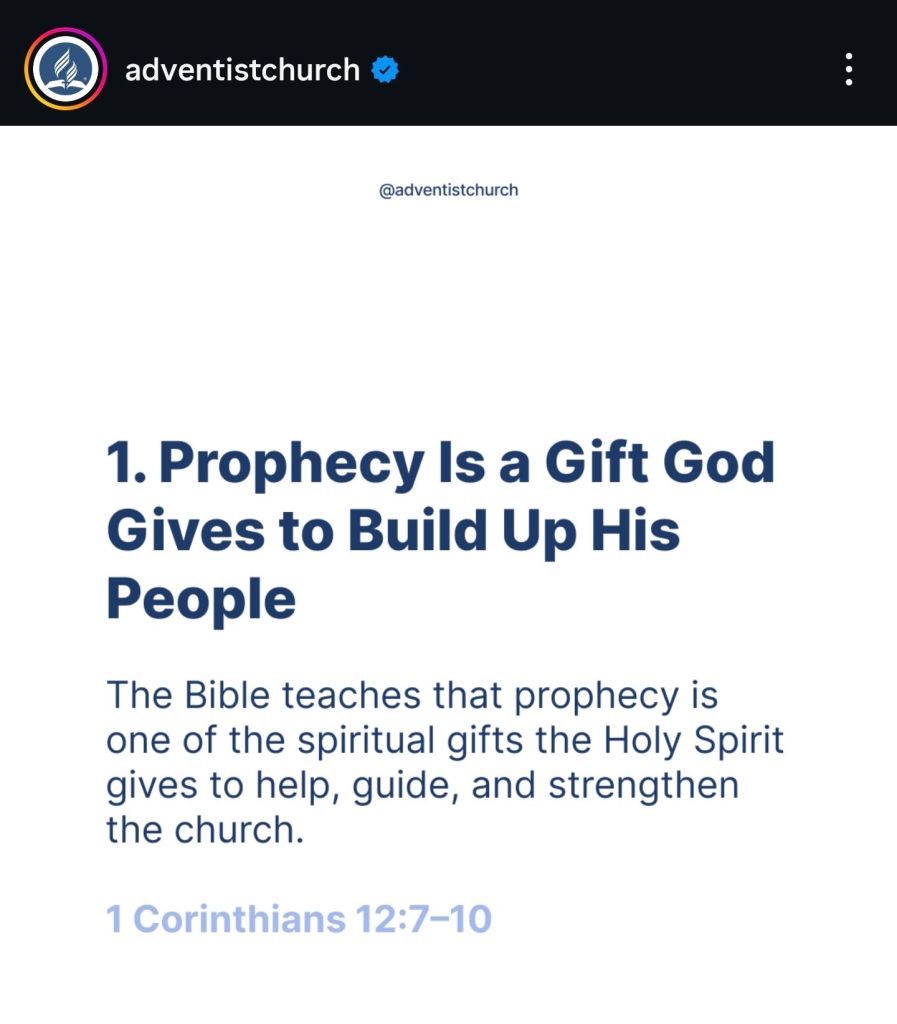
So far so good. Nothing particularly earthshaking here. It’s simply a gift from God. If Ellen White’s prophecies were a gift from God, then great. Let’s see how that pans out.
Test 2
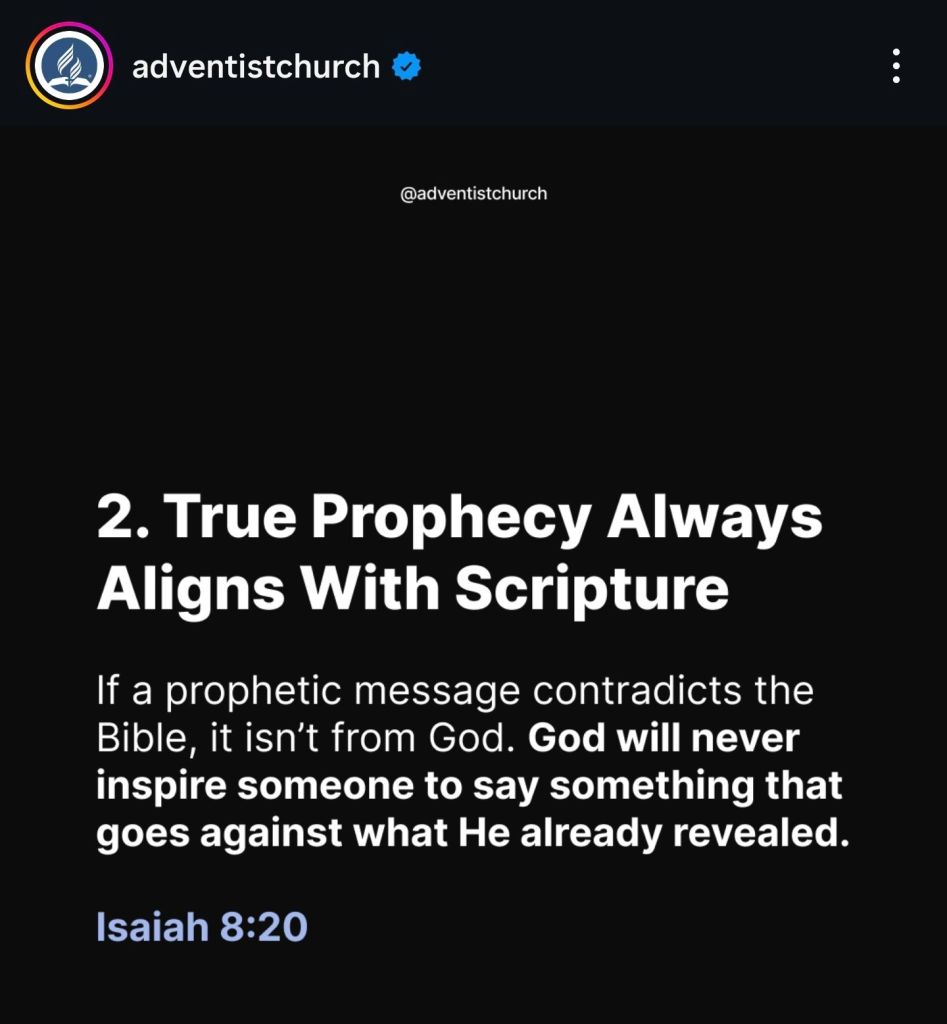
Uh oh.
Neither of the two test-case prophecies have anything to do with the rest of scripture. What do we do?
More confusingly, the bolded #2 statement is not the same as the explanation given below it. They’ve attempted to equate two unequal thoughts. Our two test-case prophecies don’t have anything that contradicts scripture. Didn’t they just say true prophecy always aligns with scripture? 🤔Are they trying to say alignment is the same thing as “not contradicting?” It seems they’re stuck in false binary situation, as that stance would quickly run into problems!
Also what’s up with Isaiah 8:20? Did you make a typo here SDA church?
20 for teaching and for instruction?” surely those who speak like this will have no dawn! – Isaiah 8:20 NRSVUE
That doesn’t seem applicable. Let’s expand that verse to see if we’re missing something.
19 Now if people say to you, “Consult the ghosts and the familiar spirits that chirp and mutter; should not a people consult their gods, the dead on behalf of the living, 20 for teaching and for instruction?” surely those who speak like this will have no dawn! 21 They will pass through the land, greatly distressed and hungry; when they are hungry, they will be enraged and will curse their king and their gods. They will turn their faces upward, 22 or they will look to the earth, but they will see only distress and darkness, the gloom of anguish, and they will be thrust into thick darkness. – Isaiah 8:19-22 NRSVUE
SDA church what are you on about here? This doesn’t seem applicable at all. Who’s running your social media? Consulting ghosts and the familiar spirits? Are you….are you suggesting prophecy can only come from ghosts? (Kidding)
Test 3
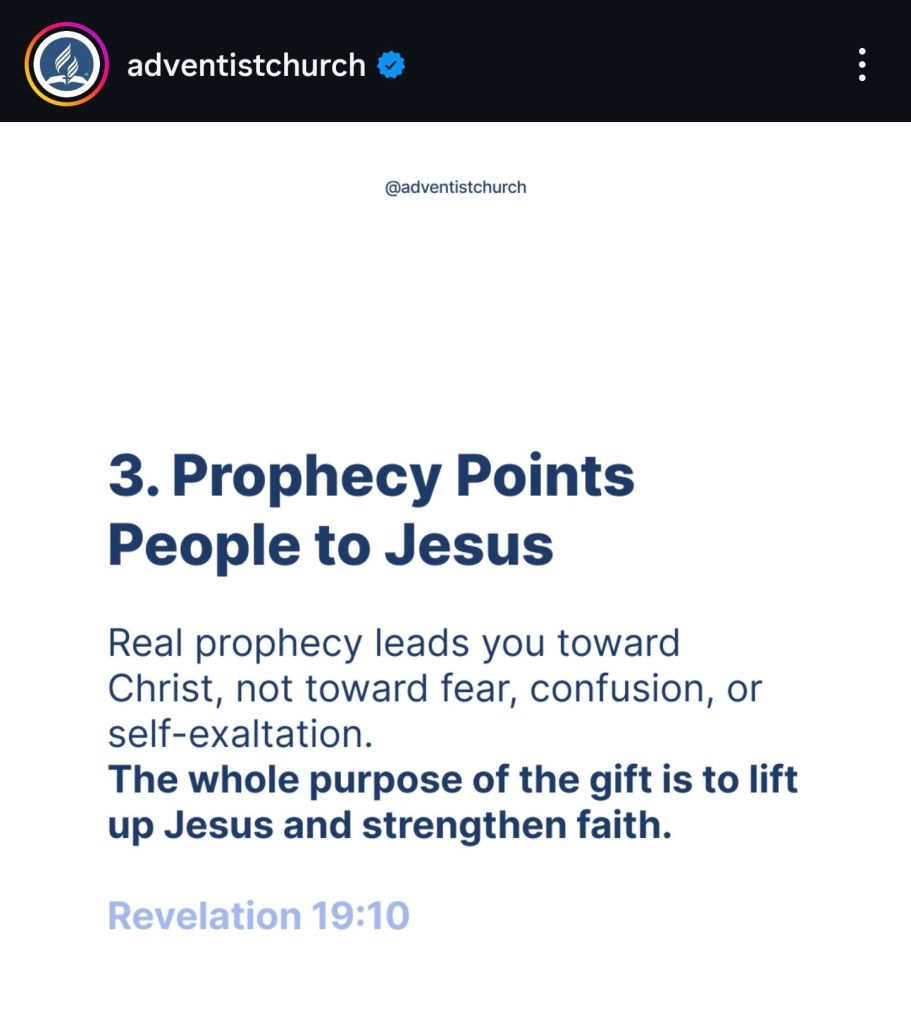
Well shoot. Neither of our test-case prophecies have anything to do with Jesus either. In fact, since the 1856 vision prophecy failed, that would actually undermine faith if it was a true prophetic gift she had right? It seems like at least some people were undoubtedly led to confusion.
Test 4
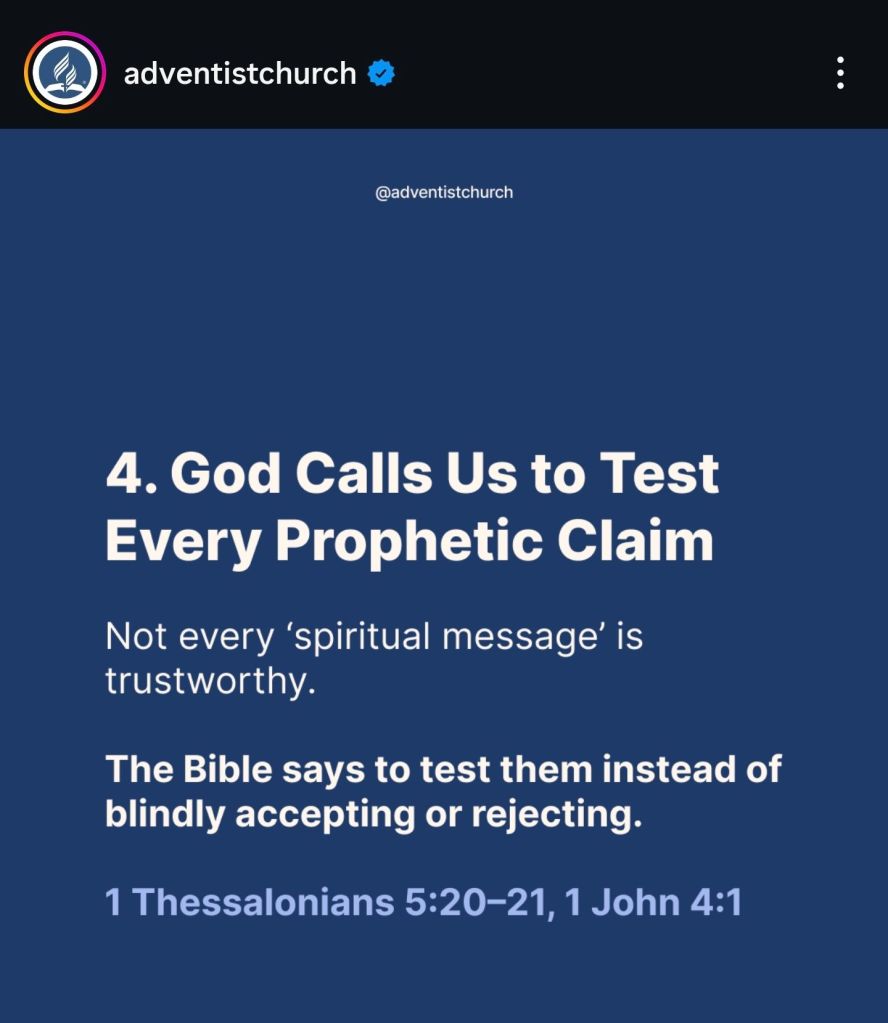
Agreed on this. We should test them. But how? Neither of those two verses actually tell us how to test prophecy, only that we should.
The only path forward here is to test them on their success rate. Here we’re batting 50% since the civil war did indeed happen. (However that’s about as remarkable as me telling you Russia would invade Ukraine a month before it happened. You’d be like “well duh. We all watch the news too.“)
I guess we also reject the 1856 vision then? After all, it didn’t happen, and the outcome is the only applicable test.

Test 5
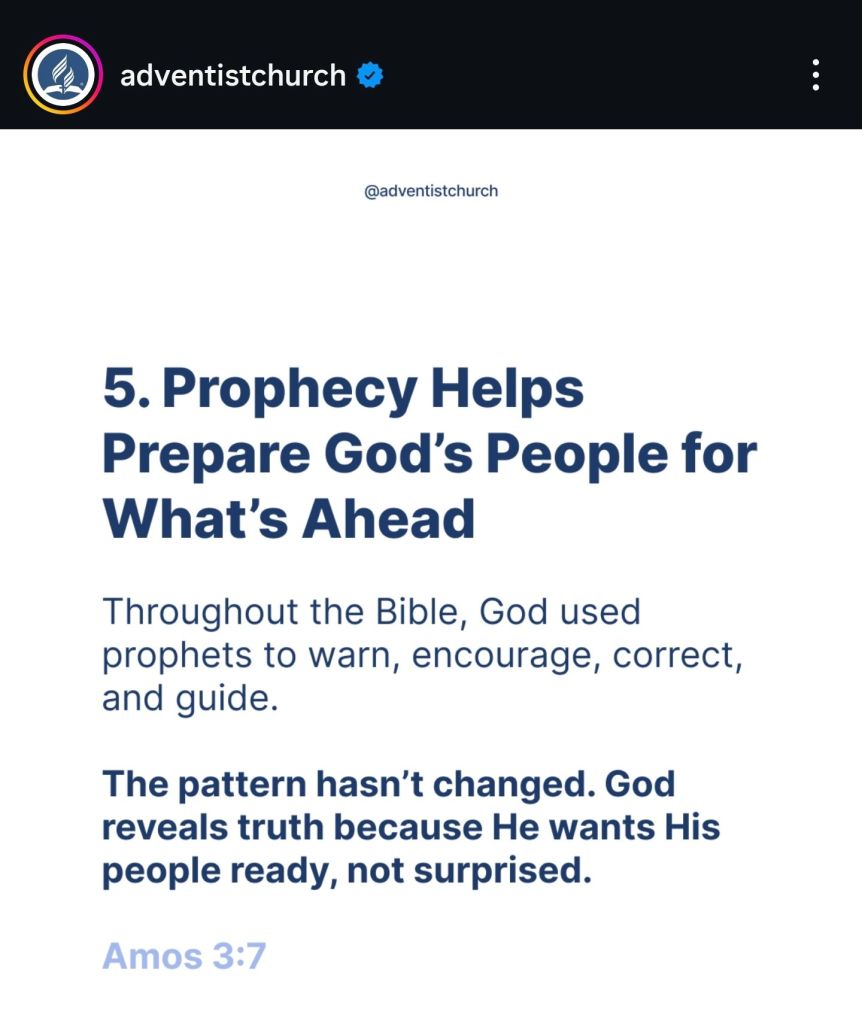
For those who thought they were going to see Jesus’s return based on her failed vision, I’d have to say it was not that great of a warning of what’s ahead. How else could you interpret that?
Again, for the civil war thing, I don’t think the informed and educated populous was surprised that it came true. This was just three months shy of the war’s start.
Test Results
By combing the SDA church’s stances with the EWG estate’s stances on prophecy, we have the following conclusions.
Test case 1: 1856 Vision Result
- Her prophecy did not align with scripture so it is not real
- Also this prophecy does not contradict scripture so it is real
- Her prophecy did not lead people to Christ so it’s not real
- Her prophecy is testable and it failed, so it is not real
- Her prophecy does not accurately warn people for what’s ahead so it’s not real
- Her prophecy is somehow conditional, and we should just buy that hook-line-and-sinker, so it is real (from EGW estate)
Test case 2: Civil War Vision Result
- Her prophecy did not align with scripture so it is not real
- Also this prophecy does not contradict scripture so it is real
- Her prophecy did not lead people to Christ so it’s not real
- Her prophecy is testable and it passed, so it is real
- Her prophecy accurately warned people for what’s ahead so it is real
The EWG Estate has a whole page dedicated to apologetics for just the 1856 vision. They just can’t come clean and admit failure. It would do them well, but alas, admitting error is apparently impossible. Let’s take a look at what those apologetics look like. (see here if you want to view full webpage for yourself)
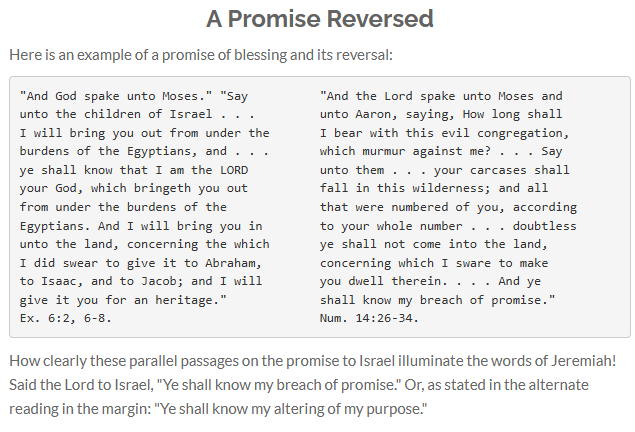
Here’s the thing about this example. It’s completely bogus for a variety of reasons. What gets me is their reach to Numbers 14:26-34, and their reliance on the KJV’s translation of tᵊnû’â in v34 as “breach of promise.” This is actually a mistranslation by the KJV. It should be rendered something like “displeasure” or “alienation.” That’s what the word actually means. It’s also what you’ll find in almost every other translation. [BTW the KJV should be wholly avoided for constructing theology. Be aware of it, but don’t use it.]
God was not admitting to a “breach of promise” here at all. He was still going to bring “the people” (I.E. the nation) into the land, just not the exact troublemakers.
This is a textbook case of sloppy apologetics. They know better. They should do better. I guess when you have an agenda, the end justifies the means.
Erasing The Past
I wanted to share another post from the SDA church here but they deleted it and I never thought to get a screenshot of the original. It had to do with prophecy, and their bold claim was that all genuine prophecy would necessarily have to come true. Going back into my comment history on Instagram, I was able to view and screenshot the first part of my comment, even though they deleted their post. The rest of the discussion is lost, but the evidence remains. (see the evidence below)
Essentially what happened was, while every other comment was an echo chamber of “amen” and “so good,” mine pointed out the obvious flaw in their logic. Very shortly after I posted, they realized this contradiction and deleted their post. (I’ve since started to screen-shot everything)

Note: This isn’t the first time they’ve had to delete something in embarrassment due to me calling them out. Here’s some things they’ve either deleted or stopped saying/using.
1.) This example
2.) A post that claimed “God’s love is dependent on our obedience.” They not only deleted it, but they pulled their entire article down from the source website! The theology was appalling and they pulled it within an hour of my comment. (This one I have records of)
3.) They stopped using the Johannine Comma as a proof-text for the trinity. This is a fraudulent text. (see this post) I called them on it and I guess it worked.
4.) They stopped putting wildly unrealistic dates on their OT history series. They claimed some OT Hebrew books were written well before Hebrew was ever a written language. This one actually had another commentator who noted the same thing as I did. Dogma overruled logic.
Failure Is Not An Option
The more I study, the more I find that an ever growing corpus of biblical prophecy just fails. Can you gerrymander the prophecies into something salvageable? Sure, on occasion. However, what about when the Bible itself admits to error?
Apologists go full force on the mental gymnastics needed to save many prophecies, but then they get to Ezekiel’s admission of failed prophecy and are just like….
When prophecy isn’t allowed to fail, it’s no longer prophecy, it’s just inventing an imaginary reality to the edict of some unverified influencer.
This dilemma is more prevalent in the last hundred years or so, especially in the USA with the advent of the Chicago statement on inerrancy. The rampant proliferation of the inerrancy believers has resulted in some increasingly complex explanations.
This crowed approaches “examining biblical prophecy” with the assumption that all of it is true. Everything in the Bible is accurate. Therefore, the only way to explain the reality of plainly observable failure is to invent new apologetics for the failure.
- God changed His mind!
- It was conditional
- It will be fulfilled later
- Partial fulfillment is good enough
- It was a metaphor for something else
If any and all prophecy can be defended in this way, then there is no way to distinguish truth from falsehood. The only way to escape this is to establish a consistent standard by which prophecies can be evaluated. Ironically, the Bible provides us with one:
If what a prophet proclaims in the name of the Lord does not take place or come true, that is a message the Lord has not spoken. That prophet has spoken presumptuously, so do not be alarmed. – Deut 18:22 NIV
The Bible author here clearly imagines prophecy as a testable prediction that bears out its legitimacy. He doesn’t say “if it doesn’t happen, you should invent a way to save face for the prophet, and explain how it could still be a prophecy from God.” No, simply, the prophet has spoke presumptuously. Don’t take it seriously. Don’t let it bother you.
I like it. It just makes plain sense.
Not everything in the Bible is true. Not everything is accurate. The Bible authors themselves certainly never make this assumption. An author even acknowledges failed prophecy!
We do a disservice to assume “our guys” are always right. How do you think a conversation with someone of a different religion would go with this stance?
Person: Hey your guy’s prophecy failed here.
You: No, you see it must have been conditional, and actually it was real, but something people did made it no longer apply.
Person: What? Your God’s actions and power are limited by humans? Isn’t He supposed to have omniscience and be able to get it right the first time?
You: Well yes, but, I mean….your prophet failed too! See! They weren’t a real prophet, and your God isn’t the real God.
Person: So my prophet is false because they are wrong, but your prophet is true and real in spite of their failure?

I’m sure that’ll be a winning argument.
Unfortunately we have a few instances in the Bible itself where later authors couldn’t live with failure, and had to reinterpret past failure to provide immediate or future viability. (We’ll get to that in the future Daniel article)
Today, don’t invent a new reality to explain failure. Let a failure be a failure. At the very least, let it be something unexplainable. Inventing not-in-evidence apologetics only makes a person look desperate and dogmatic. The goal posts get shifted from it’s true because it clearly happened to it’s true because it has to be true.
I’ll take any future prophecy with a generous helping of salt, and I’ll take the Bible’s prophecy with the same. Nothing gets a free pass. Every truth claim should face the same evaluative scrutiny.
Peace (and fairness)


Leave a Reply